The snap explained: what makes it legal, why a center who moves the ball gets a false start and what happens when it goes wrong
Every play starts with a snap. Here is what the NFL rulebook says makes one legal, why snap infractions are flagged as false starts, how the snapper can be offside, and what happens when the ball hits the ground.
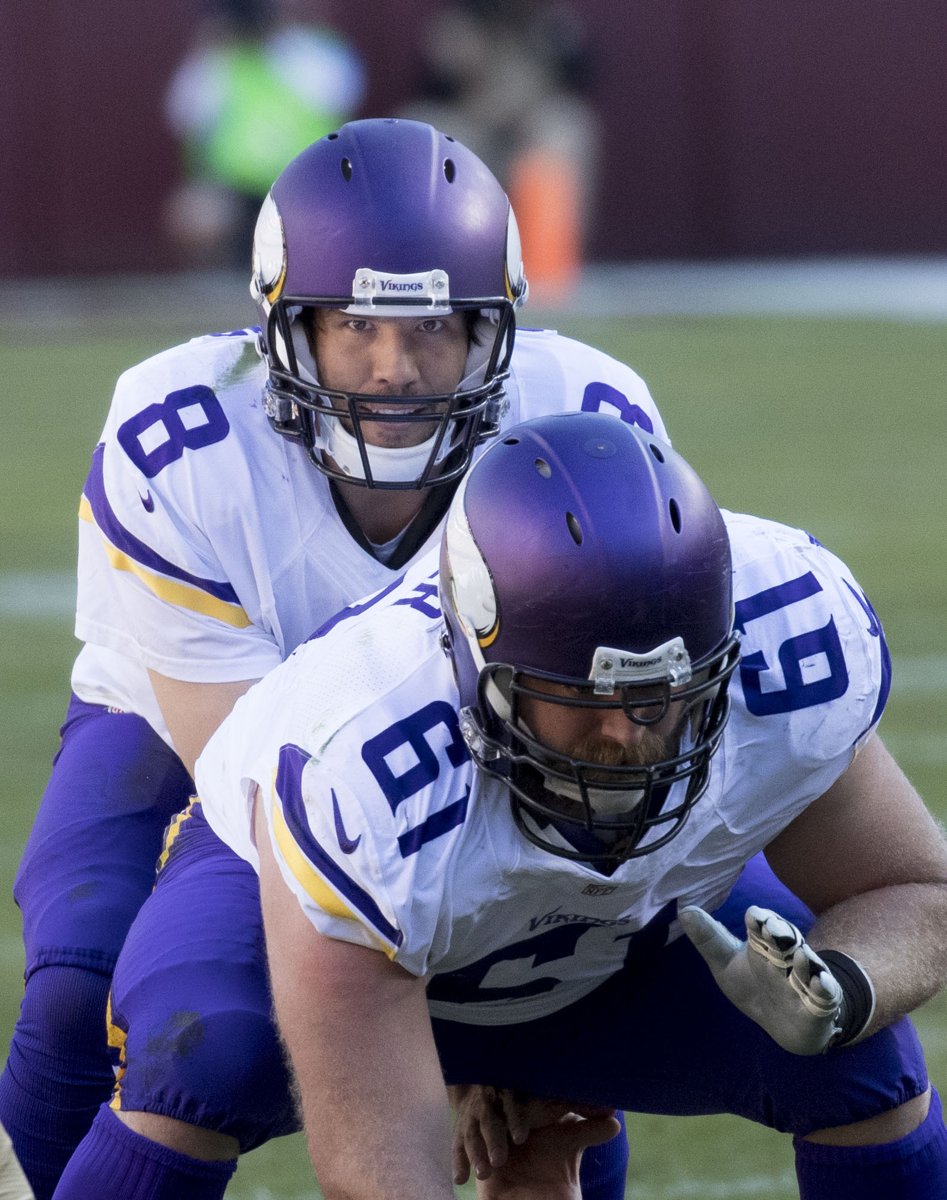
With 3 seconds left on October 21, 2018, Dallas trailed Washington 20-17 and lined up for a 47-yard field goal to force overtime. Before the ball was snapped, long snapper L.P. Ladouceur was flagged for a false start, and the official play-by-play added two words: “snap infraction.” The 5-yard penalty turned the kick into a 52-yarder. Brett Maher’s try hit the left upright, and Washington won 20-17.
Every play from scrimmage starts with a snap, and the rulebook has more to say about it than most fans realize. Here is what makes a snap legal, how officials flag a snapper and what happens when the exchange goes wrong.
What counts as a legal snap
Rule 3 defines a snap as a backward pass that puts the ball in play, either handed or passed back from its spot on the ground. Rule 7, Section 3 adds the details:
- Any offensive player on the line of scrimmage can be the snapper. It does not have to be the center.
- The ball has to start on the ground, with its long axis at a right angle to the line of scrimmage.
- It does not have to go between the snapper’s legs, but it must be one quick and continuous motion of his hand or hands, and the ball must leave or be taken from his hands during that motion.
- The snapper has to wait for the officials. A snap before they can get into position leaves the ball dead with no penalty, unless it is repeated after a warning, which is delay of game.
The penalty for illegally snapping the ball is 5 yards from the line of scrimmage. The snap also has to go to a player who is not on the line of scrimmage, unless the ball hits the ground first. Snapping to an ineligible player is another 5-yard foul, and the officials blow the whistle right away.
Why you almost never hear “illegal snap”
A snapper who moves the ball early, rocks it or flinches with it usually gets the same call as any other lineman who moves early: a false start. The official play-by-play from 2017 through 2026 does not list a single penalty under the name illegal snap. The few snap fouls it describes are recorded as false starts with “snap infraction” added, like Ladouceur’s.
Centers commit plenty of them. Through Week 7 of 2026, the official play-by-play shows 274 false starts, and 25 were on players listed at center. Chicago’s Garrett Bradbury had two in a Week 2 game against Minnesota, a 9-3 Vikings win in which every yard mattered. Rule 7 also makes it a false start for an interior lineman in a three-point stance to move the hand that is on the ground.
Offside, encroachment and the snapper
The snapper is the one offensive player who is allowed to have part of his body in the neutral zone, because the ball is there. He is offside only if part of his body is beyond the neutral zone. Las Vegas center Tyler Linderbaum has been flagged for offensive offside twice this season, in Week 3 at New Orleans and in Week 5 at New England.
The defense has its own rules around the ball. A defender who reaches into the neutral zone and touches the ball, or interferes with it during the snap, is called for encroachment, a 5-yard penalty. On a standard punt, field goal or extra-point formation, a defender within a yard of the line has to have his whole body outside the snapper’s shoulder pads at the snap. Lining up over the long snapper is a 5-yard illegal formation, and pushing a teammate into the offensive formation costs 15 yards.
When the snap goes wrong
Because a snap is a backward pass, a snap that hits the ground or is muffed by the quarterback or another backfield player is a live ball. Either team can recover it, and either team can advance it. The official play-by-play marks fumbled snaps and exchanges as “aborted” plays.
| Season | Aborted snaps and exchanges | Direct snaps to non-quarterbacks |
|---|---|---|
| 2017 | 124 | 45 |
| 2018 | 101 | 72 |
| 2019 | 119 | 76 |
| 2020 | 91 | 118 |
| 2021 | 105 | 135 |
| 2022 | 110 | 125 |
| 2023 | 96 | 134 |
| 2024 | 112 | 76 |
| 2025 | 89 | 167 |
| 2026 (through Week 7) | 33 | 38 |
A bad snap on a punt can swing a game. In Week 5, Cleveland led the New York Jets 12-10 and lined up to punt on fourth-and-10 from the Jets’ 43 with 4:01 left. Punter Corey Bojorquez fumbled the snap at the Browns’ 42, the ball got loose, and linebacker Trevin Wallace recovered it for the Jets at the Cleveland 23. Three plays later, Braelon Allen ran 22 yards for a touchdown, and the Jets won 17-12.
A defensive foul can also wipe out a recovery. In Week 7, Philadelphia went for it on fourth-and-1 at its own 44, trailing Dallas 10-7 in the first quarter. Tanner McKee fumbled the snap, and Dallas defensive lineman Quinnen Williams recovered it. But Williams had been offside. The play was wiped out, and the 5-yard penalty gave the Eagles a first down at their 49.
Direct snaps and quick snaps
The snap can go to anyone in the backfield. Derrick Henry, Pat Freiermuth and Tucker Kraft have all taken direct snaps this season, usually on short-yardage runs. The usual formation rules still apply, so the offense still needs seven players on the line.
There is one limit on snapping fast. Rule 5 says that when the offense substitutes before the two-minute warning, it cannot snap until the defense has had time to respond. If it rushes to the line and snaps to catch 12 defenders on the field, no penalty is enforced, the down is replayed, and the referee warns the head coach. A repeat is a 15-yard unsportsmanlike conduct penalty. On fourth-down punting situations, officials will not allow a quick snap that keeps the defense from substituting at any point in the game.
What to watch for
- Whistle before the snap? If the center moved the ball early, it is a false start, usually against him.
- Ball on the ground? A snap that hits the turf is a live ball, and either team can recover it.
- Defender over the long snapper? On a standard punt or field goal formation, that is a 5-yard foul.
- Running back under center? Any backfield player can take the snap, as long as the formation is legal.
- Hurry-up after a substitution? Before the two-minute warning, the offense has to let the defense match up.
Related WhyNFL reading: False start, encroachment, neutral zone infraction and offside, The tush push explained, NFL fumble rules, Illegal substitution and 12 men on the field and Illegal formation, shift and motion.
A rule or explanation needs a second look? Tell us through our corrections process.