The tush push explained: why pushing the quarterback is legal, what is still a foul and who runs it best in 2026
NFL Rule 12-1-4 bans pulling a runner but not pushing him, which is why the tush push survived a 22-10 vote in 2025. Here are the fouls that still apply, and what 112 short-yardage quarterback sneaks through Week 6 of 2026 show.
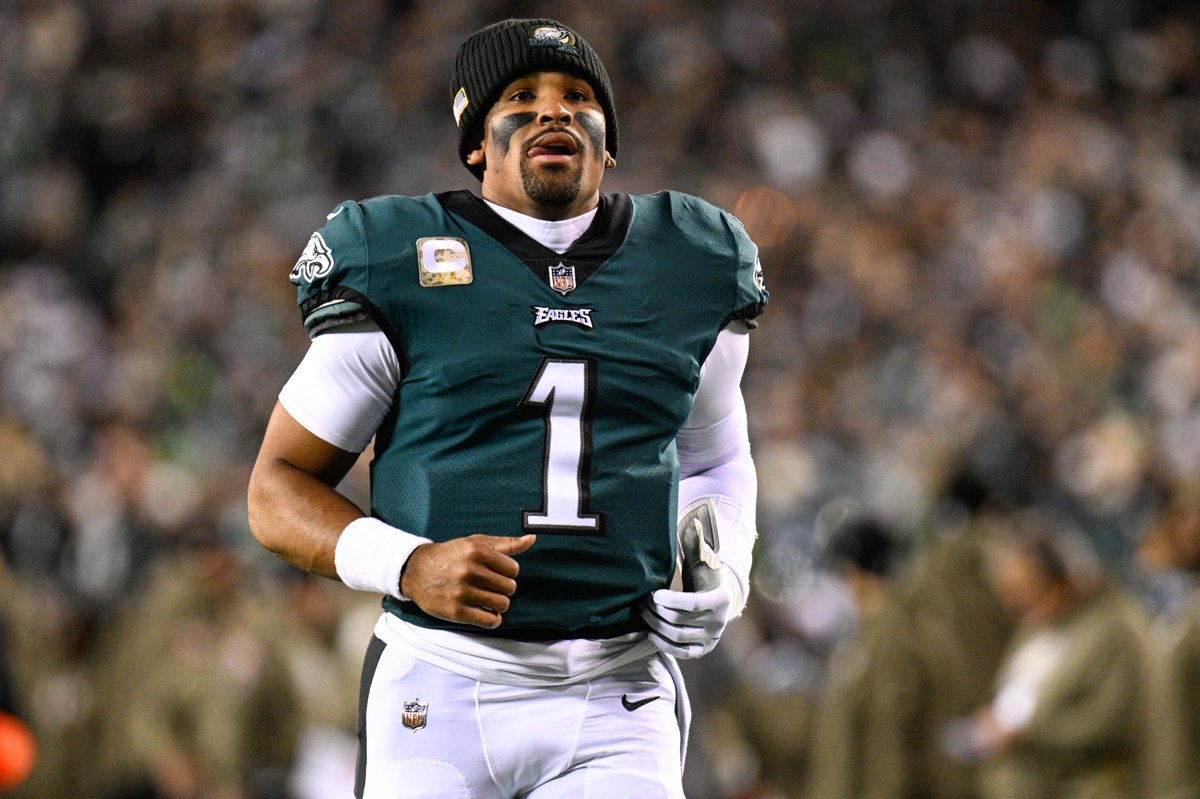
The tush push looks like a rugby scrum. The quarterback takes the snap under center, two or three teammates line up right behind him, and on the snap everyone drives forward while the players in back shove the quarterback toward the line to gain. The Philadelphia Eagles made it famous, fans call it the Brotherly Shove, and in 2025 it came within two votes of being banned. It is still legal in 2026. Here is why, what the rulebook still forbids, and how teams are using it this season.
What the rulebook says
The rule that matters is Rule 12-1-4, “Assisting the runner and interlocking interference.” It says no offensive player may:
- pull a runner in any direction at any time;
- grasp a teammate, or wrap his arms around a teammate, to help block an opponent (interlocking interference); or
- push or throw his body against a teammate to help him block an opponent or recover a loose ball.
The penalty for each is 10 yards. Pushing the runner is not on the list. Teammates may shove a ball carrier from behind as much as they want. They may not grab him and pull him forward, and blockers may not link arms to form a wall. The pulling foul is almost never called.
How pushing became legal
For most of the league’s history, both pushing and pulling the runner were fouls. In 2005 the NFL rewrote the rule so only pulling was illegal, because officials could not reliably tell who was pushing whom in a pile. That change is the reason the tush push exists.
After the Eagles won Super Bowl LIX, the Green Bay Packers proposed a ban in 2025. Their revised version would have outlawed “pushing, pulling, lifting or assisting the runner except by individually blocking opponents for him,” which would have taken the rule back to its pre-2005 form. Owners voted 22-10 in favor in May 2025, two votes short of the 24 needed. No team submitted a proposal to ban it for 2026, so it was not even voted on this spring.
The fouls that still apply
A legal push does not protect a team from the usual pre-snap rules. Because the tush push puts everyone in a tight bunch and relies on getting off the ball together, these are the flags to watch for:
- Illegal snap (7-6-3). The snap has to start with the ball on the ground and be “one quick and continuous motion” of the snapper’s hands. A center who rocks or flinches the ball to start the surge has committed a 5-yard foul.
- False start (7-4-2). An interior lineman in a three-point stance cannot move his down hand or shift his position. A quarterback under center may move, but any quick, abrupt movement is a false start. Both are 5 yards and the play is killed.
- Illegal formation (7-5-1 and 3-18-3). The offense still needs at least seven players on the line, and a lineman other than the snapper must have his helmet break the plane of the snapper’s beltline. A lineman who sets up too deep is not on the line, and the offense can be flagged for a 5-yard illegal formation.
- Reporting. Teams often bring in a sixth offensive lineman. If he wears an ineligible number and lines up in an eligible spot, he has to report to the referee first. When Philadelphia ran the play on fourth-and-1 against the Rams in Week 4, offensive lineman Willie Lampkin reported in as eligible before the snap.
- Defensive offside and neutral zone infractions (7-4). Defenders trying to time the snap often jump early. In Week 2 at Tennessee, the Eagles lined up on fourth-and-1 in the first quarter, Titans defensive lineman Jacob Martin was flagged for offside, and Philadelphia got 5 yards and a first down without needing the play.
- Defensive delay of game (4-6-5). A defender on the line who makes quick, abrupt moves to draw a false start, rather than normal defensive movement, is penalized 5 yards.
Our guides to false starts and offside and illegal formation cover those fouls in more detail.
What the 2026 numbers show
Charting data does not separate a tush push from a plain quarterback sneak, so the numbers below count every sneak with 1 yard or less to go, pushed or not. They still show why teams keep calling it.
A sneak with a yard to go has converted almost 16 percentage points more often than every other kind of run in the same spot this season. Buffalo has run it more than anyone, and Josh Allen is 12 for 12 with six touchdowns. Arizona’s Jacoby Brissett is 9 for 10, and San Francisco has converted 7 of 8.
| Team | Sneaks | Converted | TDs |
|---|---|---|---|
| Buffalo | 13 | 12 | 6 |
| Arizona | 10 | 9 | 1 |
| San Francisco | 8 | 7 | 0 |
| Indianapolis | 7 | 6 | 0 |
| Houston | 6 | 4 | 0 |
| New York Giants | 6 | 5 | 0 |
| Philadelphia | 3 | 2 | 1 |
The first touchdown in Buffalo’s new Highmark Stadium came on one. In Week 2 against Detroit, Allen went over left guard from the 1 with 9:13 left in the first quarter. The Bills won 41-31.
Where did the Eagles’ push go?
Philadelphia ran 26 quarterback sneaks with a yard or less to go in the 2025 regular season and converted 17. Through six games of 2026, it has run three. Jalen Hurts converted a third-and-1 at Tennessee and scored from the 1 at Chicago. The third was the costly one: in Week 4, leading the Rams 20-10, the Eagles went for it on fourth-and-1 from their own 38 with 1:07 left in the third quarter, and Nate Landman stopped Hurts for no gain. Los Angeles scored touchdowns with 4:02 and 1:17 left and won 24-20. The Eagles are 2-4.
Nick Sirianni said at the league meeting this spring that the play “took a little bit of a step back.” “We either have to get back to being able to be as dominant as we were at it or we find new avenues to be able to convert on third down or in the red zone,” he said.
What to watch for
- Count the bodies behind the quarterback. One or two players tight behind him means a push is coming. Nobody behind him means a plain sneak.
- Pushing is legal, pulling is not. A teammate grabbing the quarterback’s jersey and dragging him forward is a 10-yard foul, even if it is rarely called.
- Watch the first movement. Most flags on these plays come before the snap: a lineman flinching, a center moving the ball, or a defender jumping into the neutral zone.
- An extra lineman has to report. If a player with a lineman’s number lines up as a tight end, listen for the referee’s announcement.
- It is still a run. A tush push that is stopped short is a normal tackle. On fourth down, the defense gets the ball at that spot.
Related WhyNFL reading: Downs, distance and scoring, Formations and eligible receivers, Illegal substitution and 12 men, After the flag.
A rule or explanation needs a second look? Tell us through our corrections process.