Block in the back, clipping and illegal block below the waist explained
Illegal block in the back is 10 yards. Clipping and illegal block below the waist are 15. Here is how the 2026 rules separate contact from behind above the waist, below the waist, and low blocks outside the tight end box.
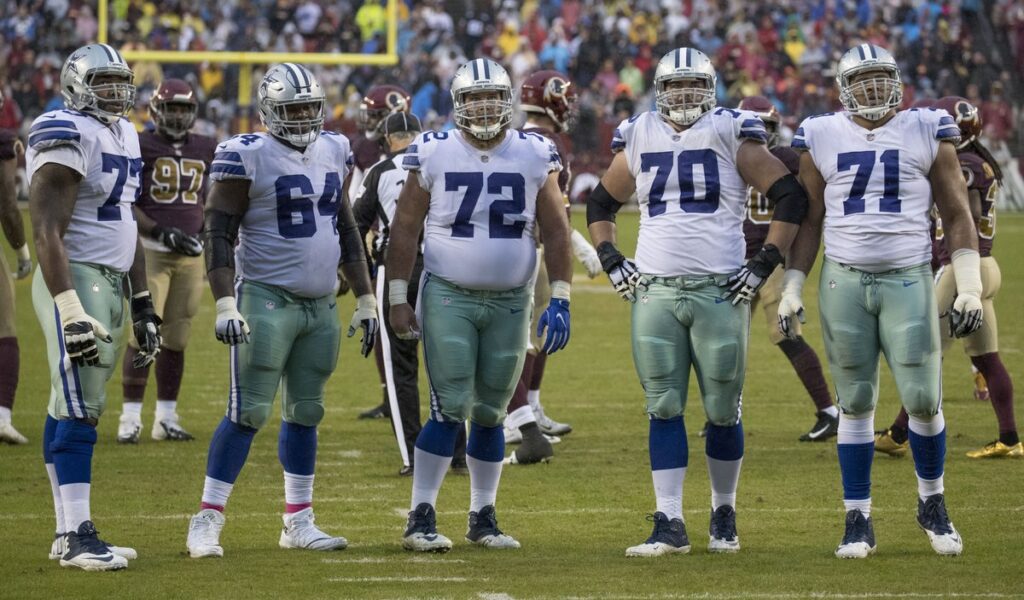
Three different flags can look like “someone got hit from behind.” Under the 2026 Official Playing Rules they are not the same foul. An illegal block in the back is a 10-yard foul. Clipping and an illegal block below the waist are 15-yard personal fouls. The difference is where the contact starts — above or below the waist — and whether the blocker is coming from behind, from the side, or after a change of possession.
This guide sorts the three calls you hear most on returns and outside the tight end box. It sits next to our holding and illegal contact and defenseless-player explainers.
Quick map: back vs. clip vs. below the waist
| Foul | Contact | Typical yards | Rule |
|---|---|---|---|
| Illegal block in the back | From behind, above the waist | 10 | 12-1-3(b) |
| Clipping | From behind, below the waist (non-runner) | 15 | 12-2-1 |
| Illegal block below the waist | Initial contact below the waist of a grounded non-runner, in prohibited situations | 15 | 12-2-4 |
Illegal block in the back (10 yards)
Rule 3 and Rule 12 define a block in the back as contact delivered from behind an opponent above his waist. It is a foul when an offensive blocker (or a kicking-team player while a scrimmage kick is in flight) blocks an opponent from behind above the waist, or uses hands or arms to push from behind in a way that affects his movement — except in close-line play.
It is not a foul when:
- the player is making a personal attempt to recover a loose ball;
- the opponent turns away from the blocker when contact is imminent; or
- both of the blocker’s hands are on the opponent’s side (if either hand is on the back, it is a foul).
Penalty: loss of 10 yards (12-1-3(b)). Officials often announce this as an illegal block above the waist.
Clipping (15 yards)
Clipping is blocking an opponent from behind below the waist, and it is prohibited against a non-runner. In close-line play, offensive clipping above the knees can be legal, but clipping at or below the knees is not — and an offensive lineman still cannot clip a defender responding to flow away from him when that defender lined up opposite another lineman more than one position away.
It is also clipping if a legal or illegal block is followed by the blocker rolling up on the back or side of a defender’s legs — including in close-line play.
It is not clipping if the opponent turns his back as the block is delivered (or about to be delivered) and can see or ward it off, or if continuous contact that starts on the side then ends up below the waist from behind while both players move the same direction.
Penalty: loss of 15 yards (12-2-1).
Illegal block below the waist (15 yards)
A block below the waist is initial contact below the waist of an opponent other than the runner who has one or both feet on the ground. A blocker who contacts above the waist and then slides down has not blocked below the waist. If the opponent wards the block off with his hands and that creates low contact, it is not a block below the waist.
Blocks below the waist are prohibited:
- by either team after a change of possession;
- by the kicking team after a free kick, safety kick, fair catch kick, punt, field goal or Try;
- by the receiving team during those same kick downs; and
- by either team during a scrimmage down before a change of possession unless the contact is inside the tight end box — except that contact below the waist outside that box is still illegal against anyone who is not a runner or a player trying to catch a forward or backward pass.
Even inside the tight end box, clipping, peel-back, chop, crackback and illegal cut blocks remain fouls.
Penalty: loss of 15 yards (12-2-4).
Related: peel-back block
A peel-back block is its own 15-yard foul (12-2-2): an offensive player cannot initiate side-and-below-the-waist contact while moving toward his own end line and approaching from behind or the side, unless his near shoulder completely crosses in front of both of the opponent’s legs. Officials often confuse peel-back language with clipping in the booth — they are separate articles.
What to watch on the next return flag
- Above or below the waist? Above + from behind → usually the 10-yard block in the back. Below + from behind → clipping.
- Did the defender turn into the block? A late turn can wipe out both a back-block and a clip.
- Change of possession or kick play? Low blocks light up after turnovers and on special teams even when they would be legal inside the tight end box on a normal snap.
- Rolling up after the block? That is clipping even if the original contact was legal.
- Hands on the side or the spine? Both hands on the side can save a back-block; a hand on the back does not.
Related WhyNFL reading: Holding and illegal contact, False start and neutral-zone fouls, Illegal formation, shift and motion, Defenseless players and helmet contact, Fair catch and punt rules, After the flag.
A rule or explanation needs a second look? Tell us through our corrections process.