Illegal formation, shift and motion explained: the NFL’s 5-yard pre-snap alignment fouls
Illegal formation, illegal shift and illegal motion under the 2026 Official Playing Rules: seven on the line, the one-second stop after a shift, who can move at the snap, and how these differ from a false start — with the Colts' 2015 fake punt as a live example.
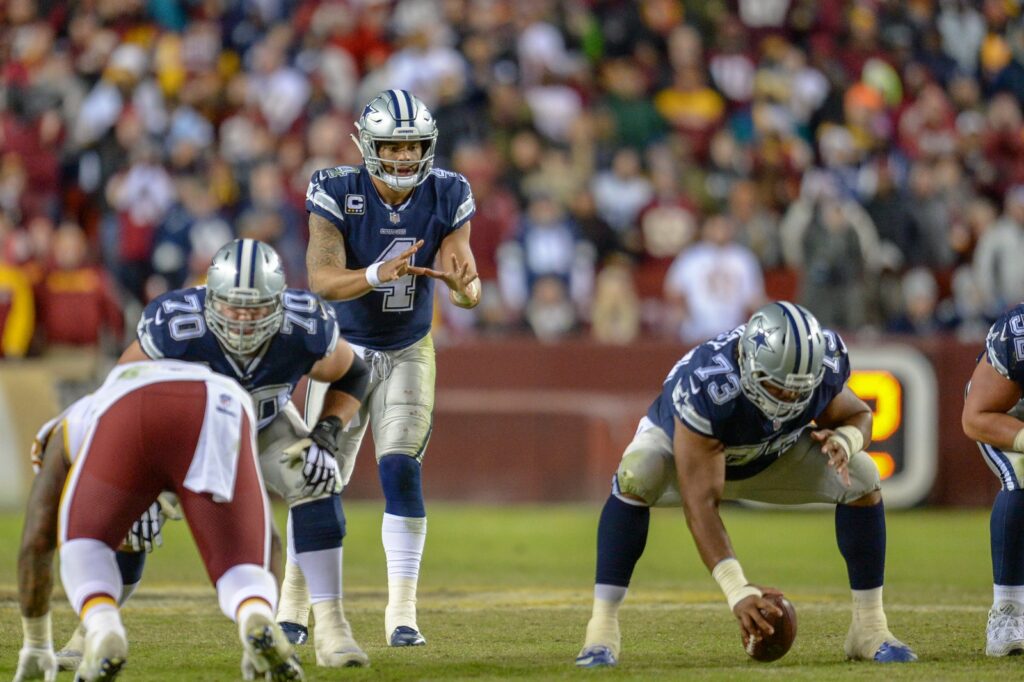
Three of the NFL’s most common “looks wrong before the snap” flags are illegal formation, illegal shift and illegal motion. All three live in Rule 7 of the 2026 Official Playing Rules. All three cost five yards. And all three are easy to mix up on a broadcast, because they often happen within a second of each other.
The Colts’ infamous October 18, 2015 fake punt against the Patriots drew an illegal-formation flag (declined) because the right side of the line was not on the line of scrimmage — a live example of why the seven-on-the-line rule exists. This guide separates the three fouls, shows what is legal, and points you to the related WhyNFL reading on eligibility and that play.
Illegal formation: seven on the line (7-5-1)
At the snap, the offense must:
- Have seven or more players on the line of scrimmage (they may lock legs);
- Have eligible receivers on both ends of that line, with only ineligible receivers between them;
- Keep every player in bounds;
- Avoid positions that are neither clearly on nor clearly off the line — with one exception for a single player directly behind the snapper (often a T-formation quarterback), who must still follow motion and eligibility rules.
Penalty: loss of five yards. Broadcasts usually abbreviate it as ILF or just “illegal formation.”
Who counts as “on the line” for the offense? Under 7-4-related definitions, a non-snapper on the line must have his shoulders facing the defense’s goal line, no part of his body in the neutral zone, and his helmet breaking a vertical plane through the snapper’s beltline. The snapper himself may not have any part of his body beyond the neutral zone.
That is why the Colts’ swinging-gate look failed even before the ball was snapped wrongly: most of the unit had drifted off the line, so Indianapolis no longer had seven on it. For the full story, read October 18, 2015: The Colts’ fake punt that was never supposed to be snapped. For how line ends and numbers create eligible receivers, read Who can catch? Formations and eligible receivers.
Illegal shift: everyone must stop together (7-4-7)
A shift is any simultaneous change of position or stance by two or more offensive players before the snap (Rule 3, Section 30). The offense may shift — and even put two or more players in motion — multiple times. The hard rule is what happens after the last shift:
- All players must come to a complete stop and be set simultaneously for at least one full second before the snap.
- The offense must present a legal formation both before and after a shift.
- If one eligible backfield player goes in motion after that stop and then himself comes to a complete stop, there is no extra one-second pause required before a second player can legally go in motion.
- If the first player has not stopped when the second starts moving, that is another shift — and everyone must stop together again for a full second.
- A T-formation quarterback who goes in motion and fails to stop for a full second before a second player moves creates an illegal shift.
Penalty: loss of five yards.
After the two-minute warning of either half, with the game clock running, a failure to get set for one full second before the snap is enforced as a false start instead (7-4-2 Item 6). If the offense does get set and then two or more players shift without resetting, it stays a live-ball illegal shift.
Illegal motion: only one, and not toward the line (7-4-8)
At the snap:
- One player lined up in the backfield may be in motion;
- He must be moving parallel to or away from the line of scrimmage — never toward it;
- Everyone else must be stationary.
If an eligible receiver who is on the line moves to another spot on the line (not forward), he must come to a complete stop before the snap or it is illegal motion. A T-formation quarterback who goes in motion must also stop for a full second before the snap.
Penalty: loss of five yards for a player illegally in motion at the snap.
How this differs from a false start
A false start (7-4-2) is a dead-ball foul: an offensive player who is set simulates the start of a play, or a player in motion makes a sudden move toward the line. Officials blow the whistle immediately. Illegal motion and illegal shift are judged at (or around) the snap and are about who is moving and whether the formation was legal, not about simulating the snap. Encroachment and neutral-zone infractions are defensive fouls on the other side of the ball — a separate WhyNFL guide topic.
| Foul | Rule | Core idea | Penalty |
|---|---|---|---|
| Illegal formation | 7-5-1 | Fewer than seven on the line, wrong ends, out of bounds, or unclear alignment | 5 yards |
| Illegal shift | 7-4-7 | After the last multi-player move, no simultaneous one-second stop | 5 yards |
| Illegal motion | 7-4-8 | More than one moving, or motion toward the line, at the snap | 5 yards |
| False start | 7-4-2 | Offense simulates the snap before the ball is snapped | 5 yards (dead ball) |
What to watch on the next flag
- Count the line. Seven helmets on it? Eligible numbers on both ends?
- Did everyone freeze together? After a group shift, look for a full second of stillness.
- How many are moving at the snap? One back, parallel or away — not toward the line.
- Was the whistle before the snap? That usually means false start, encroachment or a neutral-zone infraction, not illegal motion.
- Was a trick look involved? Swinging-gate and overshifted punt looks often fail the seven-on-the-line test before anything else goes wrong.
Related WhyNFL reading: The Colts’ fake punt that was never supposed to be snapped, Formations and eligible receivers, Holding and illegal contact explained, How to read a penalty, Two clocks, one possession.
A rule or explanation needs a second look? Tell us through our corrections process.