Backward pass and lateral rules explained: the same-yard-line test, dropped pitches and the hook-and-lateral
An NFL team gets one forward pass per play but unlimited backward passes. Here is what makes a pass backward under Rule 3-2-4, why a dropped lateral is a live ball, the two-minute rule for laterals out of bounds, the Music City Miracle and every 2026 hook-and-lateral.
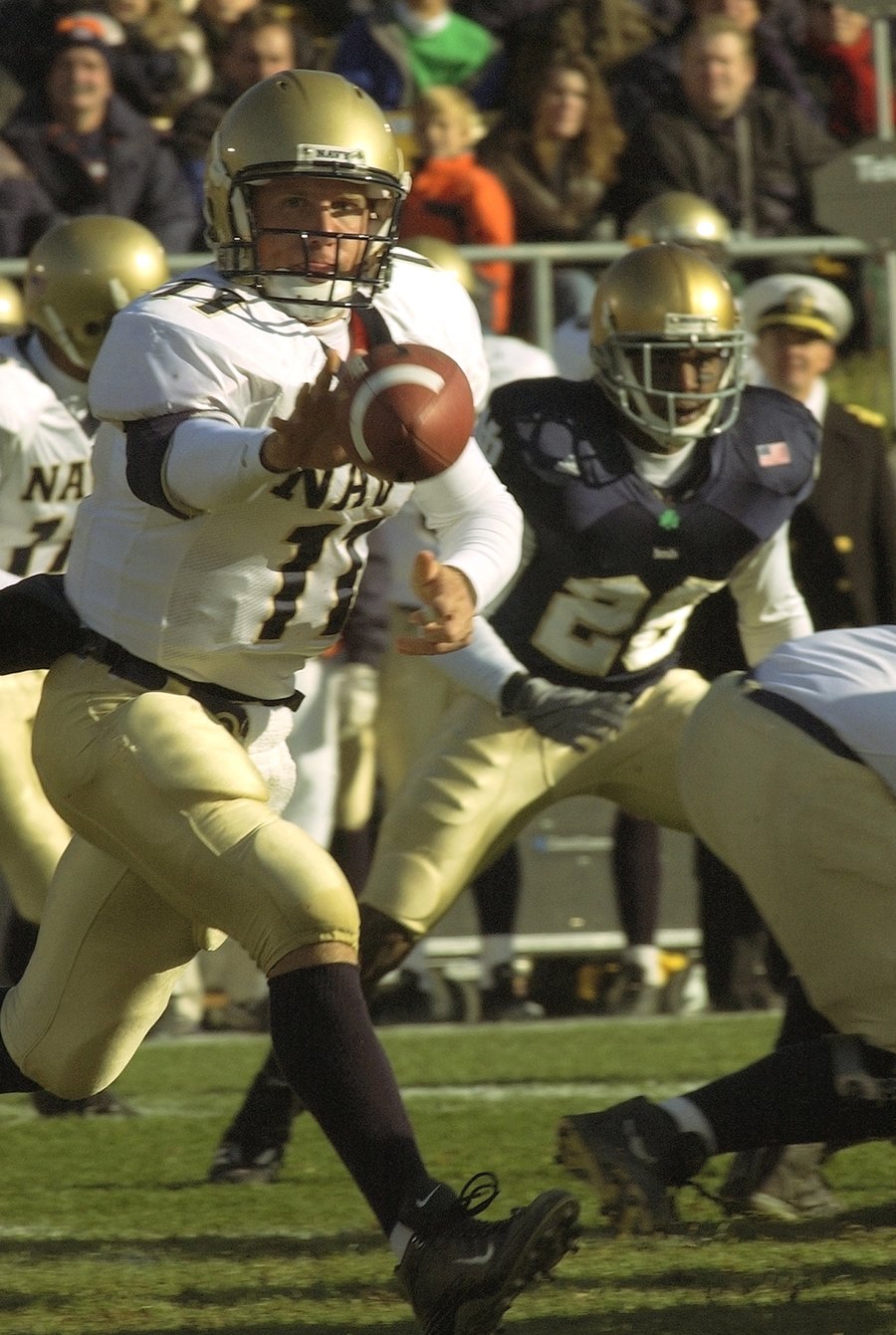
A team gets one forward pass per play, and only from behind the line of scrimmage. Backward passes are different: any player holding the ball can throw one at any time, as often as he likes, and the ball stays alive if nobody catches it. That is what makes pitches, hook-and-laterals and last-play relays possible, and why a sloppy one can hand the ball to the defense. Here is how the NFL rulebook treats backward passes in 2026.
What counts as a backward pass
Rule 3-2-4 defines it by yard lines, not by the direction the passer faces. It is a backward pass if the spot where the ball is first touched by a player, or hits the ground, is parallel to or behind the yard line where the ball left the passer’s hand. A throw straight across the field counts as backward. Anything that lands even slightly closer to the opponent’s goal line is a forward pass.
- The snap is a backward pass. It becomes one the moment the snapper lets go of the ball.
- Batting does not change it. If a pass is batted, muffed, punched or kicked, it keeps its original designation as forward or backward.
- Handing is not passing. A player may hand the ball backward at any time, but handing it forward is legal only to an eligible receiver behind the line (8-7-4). Handing it forward beyond the line is loss of down and 5 yards.
Unlimited laterals, and they stay alive
Rule 8-7-1 says a runner may throw a backward pass at any time, and players of either team may advance after catching one or after recovering one that has hit the ground. That leads to the biggest difference from a forward pass: a dropped lateral is not an incomplete pass. It is a loose ball. If a pitch bounces off a running back’s hands, the defense can scoop it up and run.
A backward pass also escapes the limits on fumbles. Rules 8-7-5 and 8-7-6 say that on fourth down, after the two-minute warning and on a Try, only the player who fumbled may recover and advance for his team. Those restrictions are written for fumbles. A teammate who picks up a backward pass that hit the ground can still advance it, which is why a multi-lateral play at the end of a game can keep going.
Laterals are legal after a change of possession, too. An interception or kick return can turn into a relay, while a forward pass after a change of possession is always illegal.
Out of bounds, the two-minute warning and fouls
- Out of bounds. A backward pass that goes out of bounds between the goal lines is dead, and the ball goes to the team that threw it at the inbounds spot (8-7-2). If it goes out behind a goal line, the safety and touchback rules in Rule 11 apply.
- After the two-minute warning. Throwing a backward pass out of bounds to stop the clock is an action that conserves time (4-7-1). Before a change of possession, it costs a loss of down and 5 yards, and if the offense does it with time running, officials also take 10 seconds off the clock unless the offense uses a timeout.
- Fouls during a backward pass. The basic spot is where the backward pass was thrown (8-7-7). If that spot is behind the line of scrimmage, fouls are enforced from the previous spot instead.
- A forward toss by mistake. If the ball goes forward, it is a forward pass. Thrown from behind the line, it might be the play’s one legal forward pass. Thrown from beyond the line, or as a second forward pass, it is an illegal forward pass, which costs the offense 5 yards and a loss of down (8-1-2).
What replay can review
Rule 15-3-11 makes the direction of a pass reviewable. If officials rule a pass incomplete and replay shows it was clearly backward, the ball goes to the team that recovered it in the immediate continuing action. If there was no clear recovery, the team that last had the ball keeps it where possession was lost. That is why officials are told to let the play run when a pitch hits the ground.
The Music City Miracle
The most famous lateral in NFL history came in a wild-card game on January 8, 2000. Buffalo’s Steve Christie kicked a field goal with 16 seconds left to give the Bills a 16-15 lead. On the kickoff, Tennessee’s Lorenzo Neal fielded the ball and handed it back to tight end Frank Wycheck, who threw it across the field to Kevin Dyson. Dyson ran 75 yards down the left sideline for a touchdown with three seconds left.
The whole play turned on Rule 3-2-4. Buffalo argued that Wycheck’s throw went forward. Referee Phil Luckett reviewed it and let the call on the field stand, explaining that the ball left Wycheck’s hand at the 25-yard line and Dyson caught it right there on that yard line. A throw that is caught on the same yard line counts as backward. The Titans won 22-16.
The Miami Miracle and the hook-and-lateral
The modern version starts with a forward pass. On December 9, 2018, Miami trailed New England 33-28 with seven seconds left, no timeouts and the ball at its own 31. Ryan Tannehill completed a 14-yard pass to Kenny Stills, who lateraled to DeVante Parker, who quickly lateraled to Kenyan Drake. Drake ran the final 52 yards for a 69-yard touchdown on the last play. Replay confirmed both laterals, and the Dolphins won 34-33.
That catch-then-pitch is the hook-and-lateral, and offenses are using it with success this season. Through the first 94 games of 2026, there have been six, all of them on third or fourth down with more than 10 yards to go, and they have averaged 26.2 yards.
| Week | Game | Play | Result |
|---|---|---|---|
| 1 | BUF at HOU | Keon Coleman catch, lateral to Khalil Shakir on 3rd-and-12 | 11 yards, a yard short |
| 3 | ARI at SF | Mike Evans catch, lateral to Deebo Samuel Sr. on 3rd-and-12 from the 49ers’ 18 | 82-yard touchdown |
| 4 | DAL at HOU | Dalton Schultz catch, lateral to David Montgomery on 3rd-and-14 | 21 yards to the Dallas 6. Touchdown on the next play |
| 4 | DET at CAR | Amon-Ra St. Brown catch, lateral to Jahmyr Gibbs on 4th-and-20 | 13 yards, turnover on downs |
| 5 | LV at NE | Efton Chism III catch, lateral to TreVeyon Henderson on 3rd-and-11 | 16 yards, first down |
| 6 | CHI at ATL | Rome Odunze catch, lateral to Roschon Johnson on 3rd-and-11 | 14 yards, first down |
The 49ers’ version was the biggest. Leading Arizona 6-0 in Week 3, they faced 3rd-and-12 at their own 18. Brock Purdy hit Mike Evans for 2 yards, and Evans pitched to Deebo Samuel Sr., who ran the remaining 80 yards. San Francisco won 36-30.
Laterals of any kind remain rare. The official play-by-play shows between 15 and 31 regular season plays a year with a lateral since 2018, and catch-and-lateral plays make up most of them in recent seasons.
| Season | Plays with a lateral | Catch-and-lateral plays | Touchdowns |
|---|---|---|---|
| 2018 | 23 | 14 | 1 |
| 2019 | 20 | 8 | 1 |
| 2020 | 23 | 8 | 1 |
| 2021 | 21 | 13 | 0 |
| 2022 | 24 | 14 | 3 |
| 2023 | 15 | 8 | 1 |
| 2024 | 31 | 20 | 3 |
| 2025 | 23 | 18 | 1 |
| 2026 through 94 games | 6 | 6 | 1 |
What to watch for
- Check the yard line. A pitch caught on the same yard line it was thrown from is legal. One that drifts forward is a forward pass.
- Keep playing after a bad pitch. If a lateral hits the ground, the ball is live. Watch for defenders diving on it.
- No fourth-down or two-minute limit. Unlike a fumble, a backward pass can be recovered and advanced by a teammate late in a half.
- Watch the sideline late in halves. Throwing a lateral out of bounds to stop the clock after the two-minute warning brings a loss of down, 5 yards and possibly a 10-second runoff.
- Look for replay on last-play relays. Every lateral on a scoring play can be checked for direction.
Related WhyNFL reading: Illegal forward pass and illegal touching, Fumble rules, Safety vs. touchback, Challenges and instant replay and Timeouts.
A rule or explanation needs a second look? Tell us through our corrections process.