Where NFL penalties are enforced: the previous spot, the spot of the foul and the three-and-one rule
A 10-yard holding penalty can cost 10 yards, cost a 45-yard run or barely cost anything. Here is how the NFL decides where a penalty is measured from, including the basic spot, the three-and-one method and half the distance.
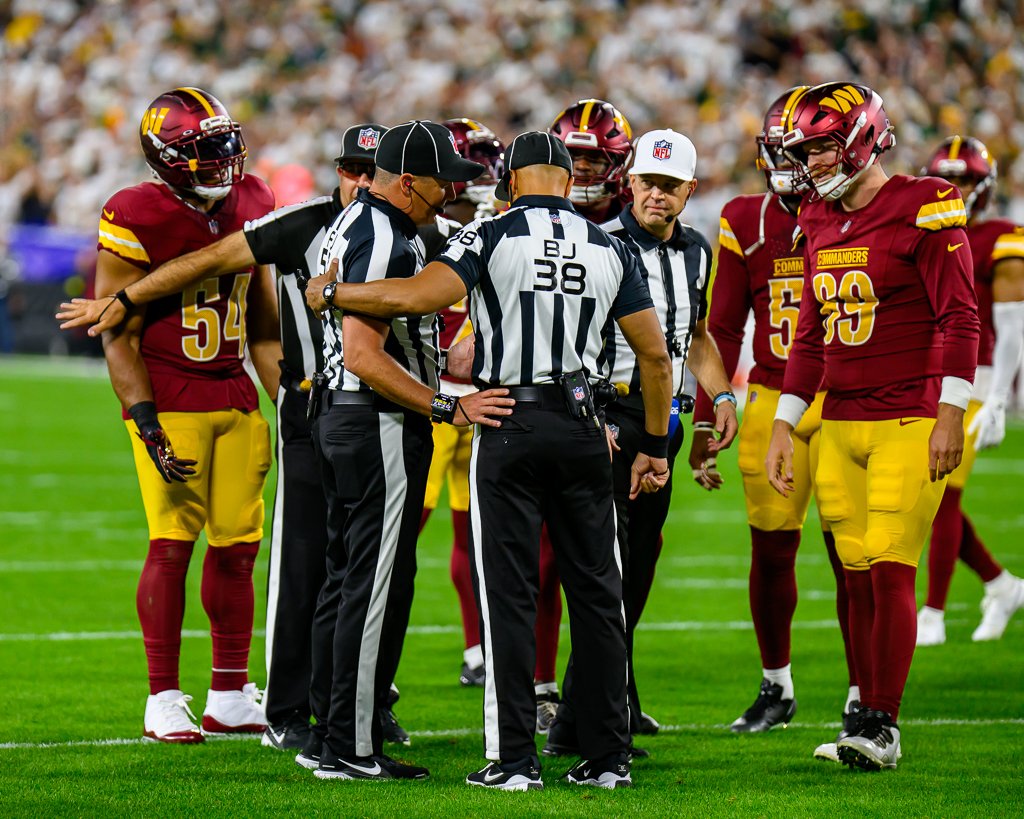
Every NFL penalty has a number of yards, but the yards have to be measured from somewhere. A 10-yard holding penalty can cost the offense 10 yards, cost it only one yard, or take away a 45-yard touchdown run and still leave the ball 25 yards closer to the end zone than where the play started. The difference is the spot of enforcement. Here is how the NFL rulebook decides it.
The five spots
Rule 14 lists the places a penalty can be measured from:
- The previous spot is where the ball was snapped.
- The spot of the foul is where the foul happened.
- The dead-ball spot is where the play ended.
- The succeeding spot is where the next play would start if there were no penalty.
- The spot of a fumble or backward pass is used for fouls during a fumble or lateral.
Fouls before the snap, such as a false start or encroachment, are enforced from the succeeding spot, and the down stays the same unless the penalty gives a first down. Fouls at the snap are enforced from the previous spot.
Passing plays: back to the line of scrimmage
For any foul from the snap until a forward pass is caught or falls incomplete, the penalty is enforced from the previous spot. That is why offensive holding on a pass play is usually walked off from the line of scrimmage, no matter how far the pass went.
Tampa Bay found that out in Week 3 against Minnesota. On third-and-29 from his own 15, Baker Mayfield threw an 85-yard touchdown pass to Chris Godwin, but lineman Luke Goedeke was flagged for holding. The penalty was enforced from the 15, and because 10 yards would have been more than half the distance to the goal line, it became 7 yards. The Buccaneers faced third-and-36 from their 8 and punted. Minnesota won 23-16.
There are exceptions. Defensive pass interference is a spot foul. Intentional grounding is a loss of down at the spot of the pass or 10 yards from the previous spot, whichever is worse for the offense. A personal foul by the defense before a pass is completed is enforced from the previous spot or the end of the play, whichever helps the offense more.
Running plays: the basic spot and the three-and-one rule
On a running play, the rulebook uses a reference point called the basic spot. If nobody fumbles and the ball does not change hands, the basic spot is where the run ended. The three-and-one method then decides where the penalty is measured from.
| Foul on a running play | Where the penalty is measured from |
|---|---|
| Defense fouls, anywhere on the field | The basic spot (the end of the run) |
| Offense fouls beyond the basic spot | The basic spot |
| Offense fouls behind the basic spot but beyond the line of scrimmage | The spot of the foul |
| Offense fouls behind the line of scrimmage | The previous spot |
| Run ends behind the line of scrimmage | The previous spot, for fouls by either team |
That is why a hold by a receiver blocking downfield can cost much less than it seems. The 2026 season’s first play from scrimmage was an example. In Chicago’s opener at Carolina, D’Andre Swift ran 17 yards from the Bears’ 20 to the 37, but receiver Rome Odunze was flagged for holding at the 29. The penalty was measured from the spot of the foul, so Chicago had first-and-11 at its 19, only one yard behind where the play started.
San Francisco got an even better deal in Week 3 against Arizona. Leading 29-27 with 1:52 left, Brock Purdy scrambled 45 yards for a touchdown on second-and-13. George Kittle was flagged for holding at the Arizona 10, so the touchdown came off the board, and the 49ers got the ball at the 20. That was still past the line to gain, so it was a first down. Two plays later, Purdy threw a 20-yard touchdown pass to Kittle, and San Francisco won 36-30.
When a catch becomes a run
A passing play ends the moment the ball is caught. After that, the receiver is a runner, and fouls are enforced by the running-play rules.
Buffalo kept a key fourth-down conversion that way in Week 3 against the Los Angeles Chargers. Trailing 13-10 early in the fourth quarter, Josh Allen threw short to Ty Johnson on fourth-and-6 from the Chargers’ 43, and Johnson went the distance. But tight end Dawson Knox was flagged for holding at the Chargers’ 14 after the catch. The touchdown was taken away, but the hold happened during the run, beyond the line, so the penalty was measured from the 14. Buffalo kept the ball with a first down at the 24.
Two plays later, Allen scrambled 16 yards to the 4, but this time tackle Dion Dawkins’ hold was enforced from the line of scrimmage. That is the rule for a hold behind the line on a running play. Despite more flags, Buffalo finished the drive with Allen’s 1-yard touchdown run for a 17-13 lead and won 24-16.
A defensive foul after the catch is added to the end of the play, the same as on a run. Kansas City got that benefit in Week 1 against Denver. On third-and-5, Patrick Mahomes hit running back Emmett Johnson for 25 yards to the Denver 4, and Broncos linebacker Alex Singleton was flagged for unnecessary roughness. The penalty was measured from the end of the play, but because the ball was only 4 yards from the goal line, it became half the distance, 2 yards. Mahomes threw a 2-yard touchdown pass to Kenneth Walker III on the next snap.
Half the distance and the goal line
No matter where a penalty is measured from, it cannot move the ball more than half the distance to the offending team’s goal line. Rule 14 says that general limit overrides all other enforcement rules, with exceptions only for intentional grounding and a palpably unfair act.
Goal lines add a few special cases. If the offense fouls in its own end zone and the spot of enforcement is there, the defense can take a safety. If the defense’s spot of enforcement is behind the offense’s goal line, the penalty is measured from the goal line instead.
Fumbles and laterals
When a foul happens during a fumble or backward pass beyond the line of scrimmage, the basic spot is where the fumble or pass happened, and the three-and-one method is used. If the fumble or lateral happens behind the line, every foul by either team is enforced from the previous spot.
What to watch for
- Pass or run? Fouls before the catch usually go back to the line of scrimmage. Fouls after the catch use the running-play rules.
- Where was the flag? A hold downfield on a long run is measured from where it happened, so the offense often keeps most of the yards.
- Defensive fouls ride along. On a run, a defensive foul is added to the end of the play.
- Check the yard line. Near either goal line, half the distance often decides the final spot.
- Listen for “no play.” When the referee says the down is repeated, the penalty went from the previous spot.
Related WhyNFL reading: After the flag: how to read a penalty, Holding and illegal contact, Pass interference, Offsetting penalties and double fouls and Safety vs. touchback.
A rule or explanation needs a second look? Tell us through our corrections process.