The Try explained: extra points, two-point conversions and penalties after a touchdown
Kick from the 15 or go for two from the 2: what Rule 11-3 allows on the Try, the one-point safety and defensive two-pointers, which penalties bring a second try and which move to the kickoff, plus 2026 examples from the Saints, 49ers and Broncos.
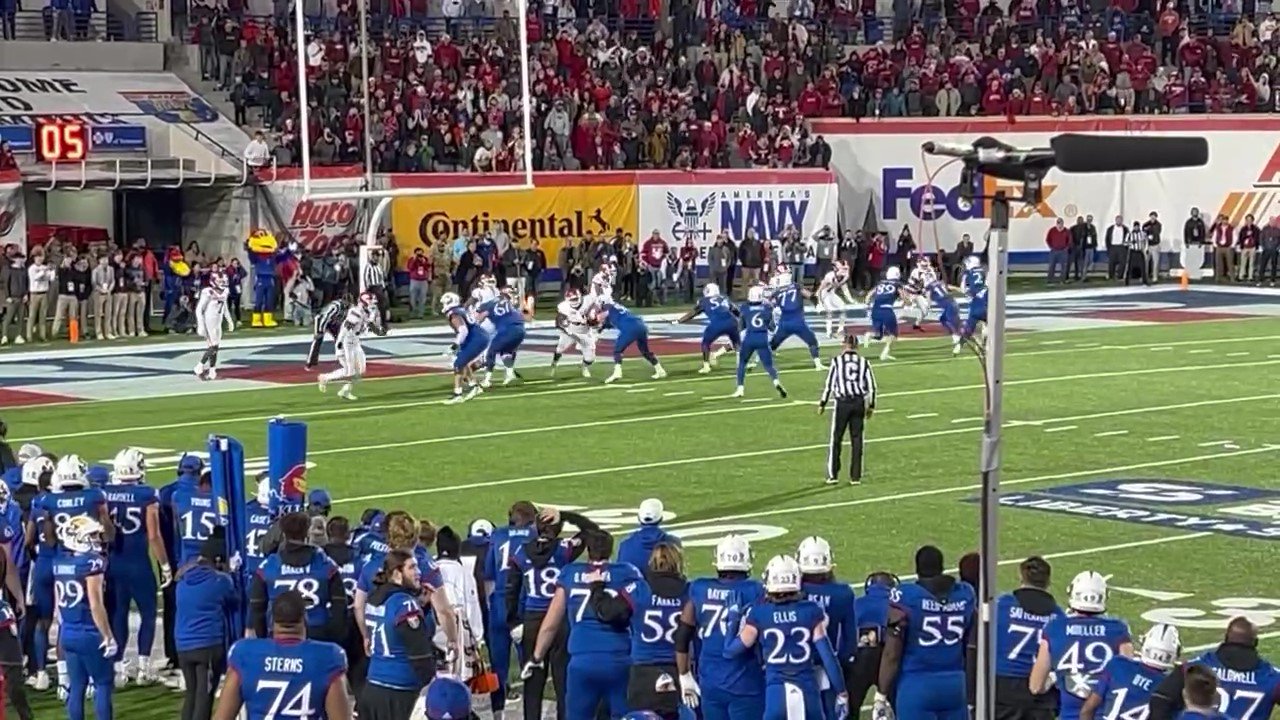
A touchdown is worth six points, and then comes one more snap. The rulebook calls it the Try. The scoring team can kick for one point from the 15-yard line or run or pass for two points from the 2. The game clock does not run, and the Try is one untimed down. Rule 11, Section 3 of the 2026 Official Playing Rules covers what the down can produce and how a penalty changes it.
Through Week 5 of 2026, public play-by-play logs show kickers made 354 of 375 extra points (94.4%) and offenses converted 20 of 35 two-point tries (57.1%). Two of those conversions came on a second chance after a defensive flag wiped out a failed first attempt.
The two spots
| Choice | Ball spotted at | Worth | 2026 through Week 5 |
|---|---|---|---|
| Kick (extra point) | Defense’s 15-yard line, about a 33-yard kick | 1 point | 354 of 375 (94.4%); 18 missed, 3 blocked |
| Run or pass (two-point conversion) | Defense’s 2-yard line | 2 points | 20 of 35 (57.1%); passes 15 of 29, runs 5 of 6 |
The offense picks a spot anywhere between the hash marks. Once the officials declare the ball ready for play, it can switch from kicking to going for two, or the other way, only if there is a penalty or a charged timeout by either team.
On these numbers, a kick averages about 0.94 points and a two-point try about 1.14. Five weeks is a small sample, and the score and the clock usually decide which choice is right.
What the down can produce
Rule 11-3-2 lists every possible result:
- A good kick: 1 point. No tee is allowed.
- A touchdown by either team: 2 points. If the defense intercepts, recovers a fumble or returns a blocked kick all the way, it scores the two.
- What would normally be a safety: 1 point for the other team. This is the rare one-point safety.
- A touchback: the Try fails, and there is no replay.
- The down ends when either team scores or the ball is dead by rule. If the defense takes the ball away, the play goes on until the ball is dead, and a return to the far end zone scores two.
Fumbles follow the late-game rule. Under 8-7-6, a fumble during a Try can be advanced by any opponent, but on the offense only the player who fumbled can recover and advance it. If a teammate recovers, the ball is dead. Our fumble guide explains the same rule after the two-minute warning.
The Try also has a timing rule. Under 4-8-2(c), a touchdown on the last play of a period still gets its Try. The two exceptions are a game-ending touchdown in sudden-death overtime and a touchdown as time expires in the fourth quarter when a successful Try could not change the result.
Penalties on the Try
Many penalties on a Try are enforced on the kickoff that follows instead of on the Try itself. Rule 11-3-3 sorts them by who fouled and whether the Try worked.
| Situation | What happens | Rule |
|---|---|---|
| Defense fouls, Try fails | Offense can decline the yardage and replay the down from the new spot | 11-3-3 Item 4(c) |
| Defense fouls, Try is good | Points stand; yardage is enforced on the kickoff | 11-3-3 Item 4(a) |
| Defensive pass interference | Spot foul; in the end zone, ball at the 1 (or half the distance if better for the offense) | 11-3-3 Exception |
| Offense fouls, Try is good | Points come off and the Try is repeated from the new spot, unless the foul carries loss of down | 11-3-3 Item 3(a) |
| Offense foul with loss of down (such as an illegal forward pass) | Try fails, no replay | 11-3-3 Item 3(b) |
| Offense personal or unsportsmanlike foul | Enforced on the kickoff, unless it wipes out a good Try or offsets | 11-3-3 Item 3(d) |
| Any foul after a change of possession | Enforced on the kickoff | 11-3-3 Items 3(c), 4(a) |
| Foul between the touchdown and the ready signal | Enforced on the Try | 11-3-3 Item 1 |
| Foul after the Try | Enforced on the kickoff | 11-3-3 Item 7 |
When a foul leads to a re-Try, the offense can enforce it from the spot it used or from the other Try spot. A defensive offside on an extra point can move the ball from the 15 to the 10 for another kick, or from the 2 to the 1 for a two-point try. After the yardage, the ball can again go anywhere between the hashes.
2026 examples
Second chances on two-point tries. On September 20 in Baltimore, the Saints pulled within 17-15 on Tyler Shough’s 21-yard touchdown pass to Chris Olave with 9:42 left. Shough was sacked on the two-point try, but Baltimore was flagged for defensive holding. The half-the-distance penalty moved the ball to the 1, Travis Etienne ran it in on the replay, and New Orleans tied the game 17-17 on its way to a 24-17 win.
On October 11 in Seattle, the 49ers took a 27-26 lead on Brock Purdy’s 7-yard touchdown pass to Brandin Cooks with 11:02 left. Purdy’s two-point pass to Mike Evans fell incomplete, but Seattle was called for pass interference. The ball went to the 1, and Purdy hit Evans on the replay to make it 29-26. San Francisco won 32-29.
Yardage carried to the kickoff. On September 27 in Denver, Bo Nix’s 1-yard touchdown run with 48 seconds left put the Broncos ahead, and Wil Lutz’s extra point made it 30-26. The Rams were flagged for offside on the kick. The point stayed on the board, and the 5 yards were enforced on the kickoff. Lutz kicked off from the Denver 40 instead of the 35, and Denver won by that score. Dallas got the same 5 yards at Houston on October 4 after an illegal-formation foul on a good Brandon Aubrey extra point, and Aubrey also kicked off from the 40.
The same rule works against the scoring team. When Chicago was called for unnecessary roughness on a good Cairo Santos extra point against Philadelphia on September 28, Chicago kept the point, but Santos had to kick off from the Bears’ 20, 15 yards back. For how the 2026 kickoff itself works, see our kickoff and landing-zone guide.
| Through Week 5 of 2026 (79 games) | Count |
|---|---|
| Extra-point kicks | 375 |
| Made | 354 (94.4%) |
| Missed / blocked | 18 / 3 |
| Two-point tries | 35 |
| Converted | 20 (57.1%) |
| By pass / by run | 15 of 29 / 5 of 6 |
| Defensive two-point returns | 0 |
How the Try got here
The NFL added the two-point conversion in 1994. Before that, every Try was worth one point however it was scored, and the kick was snapped from the 2-yard line. In 2015 the league moved the extra-point snap back to the 15, which made the kick about 33 yards, and kept the two-point try at the 2. It also let the defense score two points by returning a blocked kick, interception or fumble.
The decision can matter even when a two-point try fails. On October 23, 2000, the Jets went for two after their first touchdown while trailing Miami 30-7 and did not get it. That miss is why their three later scores only tied the game. Our history story The Monday Night Miracle walks through it.
Watch: the two-point conversion in two minutes
A short explainer on lining up at the 2 instead of kicking from the 15, and when teams choose it.
What to watch after the next touchdown
- Where is the ball? At the 15 the offense is kicking. At the 2 it is going for two.
- Did they switch? After the ready signal, a switch needs a penalty or a timeout.
- Flag on a failed try? If the defense fouled, expect the offense to take the half-distance and try again.
- Flag on a good try? The points usually stand, and the yardage moves the kickoff spot.
- Turnover? The defense can return it for two points.
- Fumble? Only the player who fumbled can pick it up and advance it for the offense.
Related WhyNFL reading: Downs, distance and scoring, NFL overtime, Pass interference explained, Leaping and leverage on kicks, After the flag, The Monday Night Miracle. Team pages: 49ers, Saints, Broncos.
A rule or explanation needs a second look? Tell us through our corrections process.