The 10-second runoff explained: late fouls, replay reversals and the Lions’ touchdown that ended the game
After the two-minute warning, an offense that stops the clock with a foul, a grounding or a reversed replay ruling can lose 10 seconds. Here is how the runoff works, how a timeout stops it and how it has ended games.
Late in a half, a team that is out of timeouts sometimes tries to stop the clock with a quick foul or a thrown-away pass. The 10-second runoff is how the rulebook takes that time back. Here is when officials take 10 seconds off the game clock, who can stop it and how it has ended games, including one this season.
The basic rule
Rule 4, Section 7 says a team may not conserve time after the two-minute warning of either half. It lists six ways to do it illegally:
- A foul by either team that stops the clock while the ball is dead, such as a false start.
- Intentional grounding.
- An illegal forward pass.
- Throwing a backward pass out of bounds.
- Spiking or throwing the ball in the field of play after a down has ended, except after a touchdown.
- Illegally batting or kicking the ball out of bounds.
The penalty is five yards unless the foul carries more. When the offense does it while the clock is running, officials also take 10 seconds off the game clock. They then set the play clock to 30 seconds and restart the game clock when the ball is ready for play.
The offense’s way out
The offense can avoid the runoff by using one of its timeouts. Then the game clock starts again on the snap. A team that has a timeout left can wipe out the runoff, but it costs the timeout.
The defense has a choice too. It can decline the penalty, but then it also declines the runoff. The play clock is set to 25 seconds, and the clock starts on the snap. Defenses usually take both the yards and the seconds.
There is never a runoff against the defense. If the defense commits one of these acts, the play clock goes to 40 seconds and the game clock starts on the ready signal, unless the offense wants it to start on the snap.
| What happened after the two-minute warning | Runoff? | Can it be avoided? |
|---|---|---|
| Offensive false start or other dead-ball foul with the clock running | Yes, 10 seconds | Offense can use a timeout; defense can decline it with the penalty |
| Intentional grounding or an illegal forward pass with the clock running | Yes, 10 seconds | Offense can use a timeout; defense can decline it with the penalty |
| Offensive illegal substitution with the ball dead and the clock running | Yes, 10 seconds, plus 5 yards | Offense can use a timeout |
| Replay reverses a ruling that stopped the clock, and the correct ruling would not have | Yes, 10 seconds | Neither team can decline it, but either team can use a timeout |
| Defense commits the same kind of foul | Never | Not applicable |
Replay runoffs
The second kind of runoff comes from replay. If a review after the two-minute warning reverses a ruling and the correct call would have kept the clock running, officials reset the clock to when the play should have ended and run 10 seconds off it. The same applies when a flag thrown with the clock running is picked up. Neither team can decline this runoff, but either team can stop it with a timeout. If fewer than 10 seconds are left, the half or the game is over.
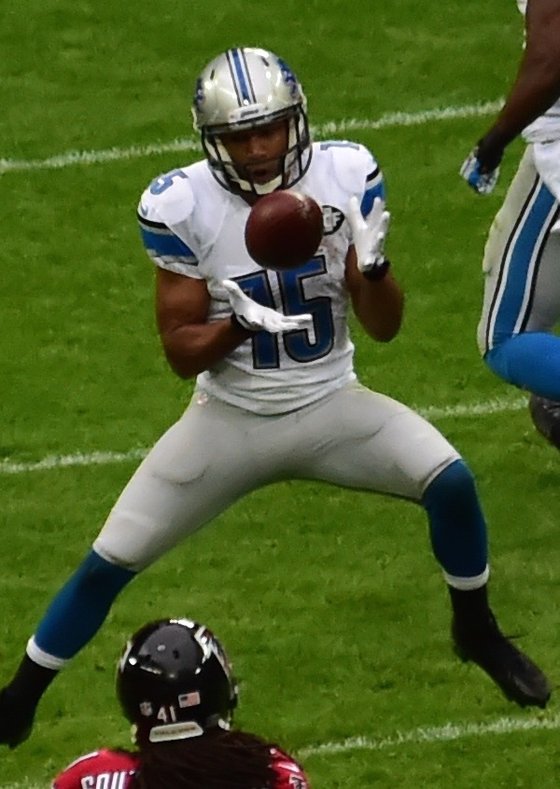
The best-known example came on September 24, 2017, in Detroit. The Lions trailed Atlanta 30-26 and had no timeouts left. Matthew Stafford threw a slant to Golden Tate, and officials ruled it a touchdown with 12 seconds left on the clock at the snap. Replay showed Tate was down just short of the goal line with eight seconds left.
A touchdown stops the clock, but a catch in the field of play would have let it run. That meant a 10-second runoff, and with only eight seconds left, the game was over. Atlanta won 30-26. Former league officiating chief Dean Blandino summed it up that day: “Had the call on the field been correct initially, the clock would have run out. That’s the spirit of the rule.”
How it has shown up in 2026
This season’s official play-by-play logs several runoffs through Week 7’s Thursday game. Three of them show the main ways the rule works:
- Week 1, Jets at Titans. With 36 seconds left in the first half, replay changed a Jets catch from out of bounds to in bounds. The Jets used their last timeout to avoid a runoff. Then, at the Tennessee 47 with 16 seconds left, they were flagged for a false start. With no timeouts left, they lost five yards and 10 seconds, and the half ended before they could run another play. They still won 23-10.
- Week 4, Steelers at Browns. In a 24-24 game, Cleveland had a false start with 1:12 left. It kept its two timeouts and accepted the runoff, and the next snap came at 1:00. The Browns won 27-24.
- Week 6, Commanders at 49ers. Washington trailed 23-17 with no timeouts and spiked the ball at the San Francisco 28 with 22 seconds left. On the next play, Jayden Daniels was called for intentional grounding. That cost 12 yards and the down, and the runoff cut the clock to six seconds. Daniels was sacked on the last play.
Other places the runoff appears
An illegal substitution by the offense after the two-minute warning, while the ball is dead and the clock is running, costs five yards and 10 seconds. A timeout the offense does not have, called while the clock is running after the two-minute warning, can also bring a runoff if the defense wants one. Either half can end on a runoff.
A legal spike does not cause a runoff. Rule 8 lets a quarterback stop the clock by throwing the ball straight into the ground immediately after the snap. The penalty applies only to a throw or spike after the down is over, or to a real grounding foul like the one in San Francisco.
What to watch for
- Count the timeouts. A team with a timeout left can use it to stop the runoff. A team without one loses the time.
- Watch the play clock. After a runoff it resets to 30 seconds, and the game clock starts on the ready signal, not the snap.
- Replay with under 10 seconds left. If a ruling that stopped the clock is reversed and the clock should have kept running, the game can end in the review booth.
- Defensive fouls. They never bring a runoff, but the clock can start again on the ready signal.
- Hurry-up false starts. A rushed offense without timeouts is the most common runoff victim.
Related WhyNFL reading: The game clock and play clock, Timeouts, Intentional grounding, False start and Instant replay.
A rule or explanation needs a second look? Tell us through our corrections process.