
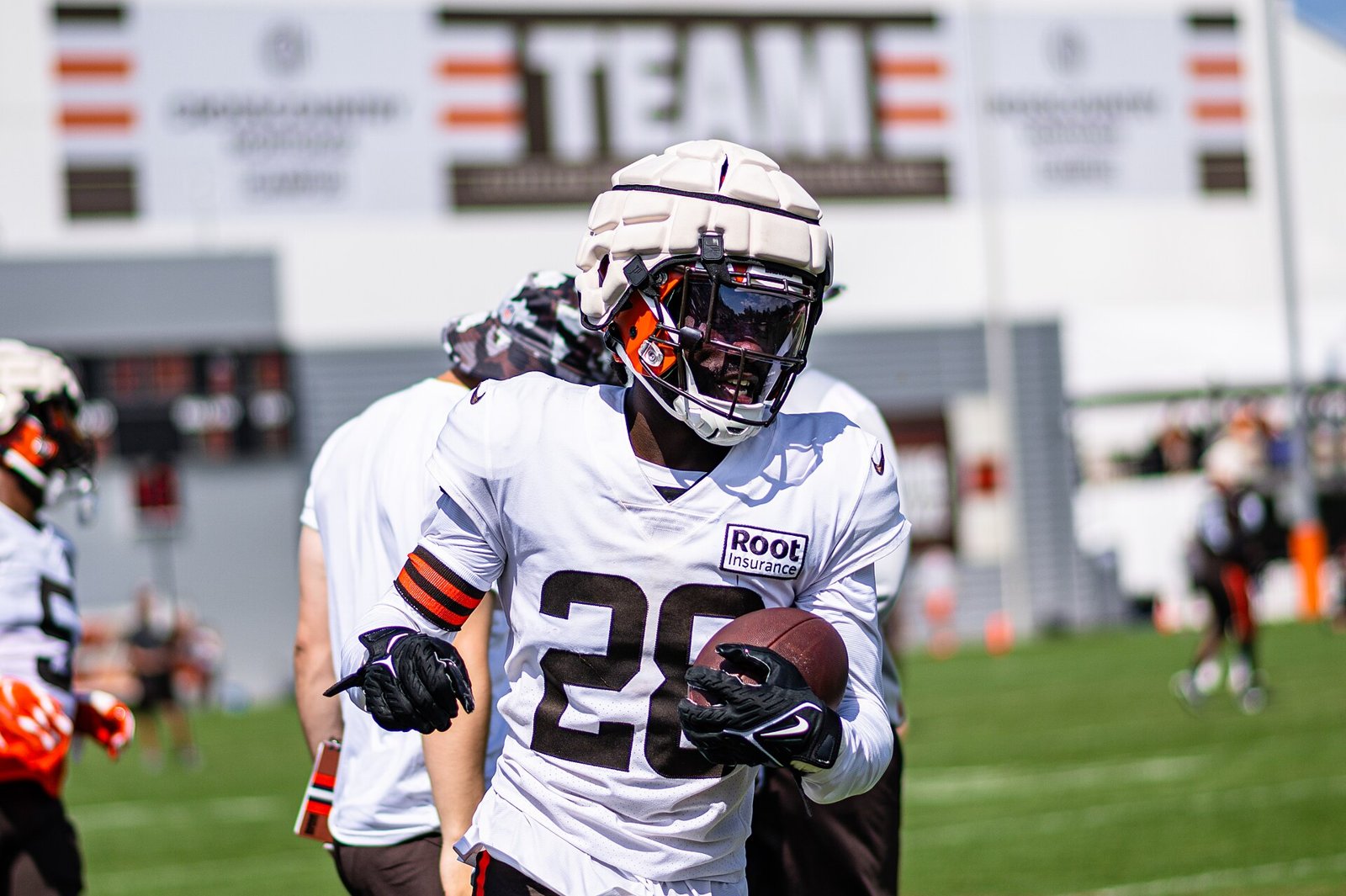
 Players at Cleveland Browns training camp, August 15, 2022. Photo by Erik Drost, CC-BY-2.0, resized.
74.5%: how researchers estimated CTE among NFL players who died from 2008 to 2023
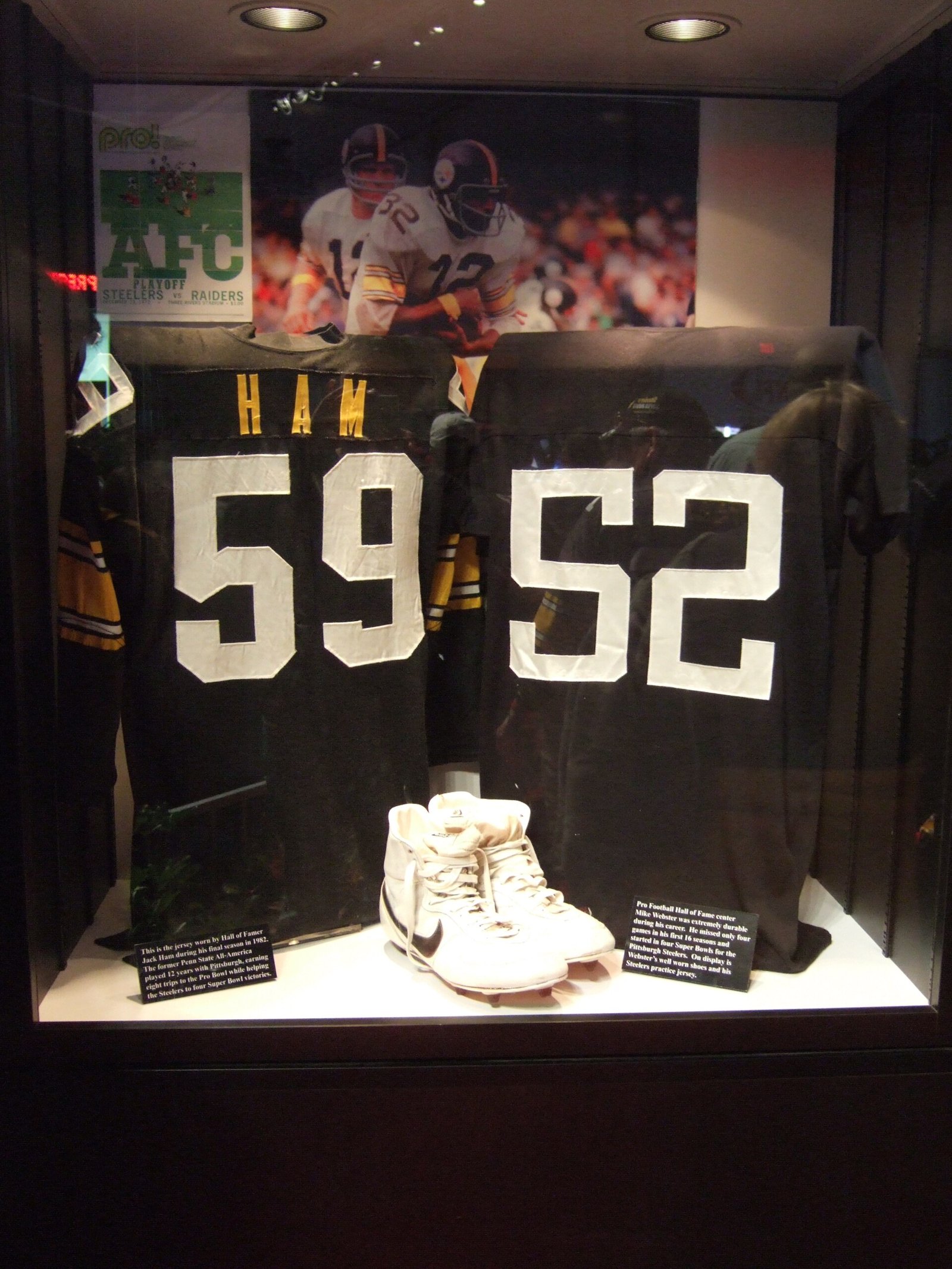 Steelers jerseys worn by Jack Ham (59) and Mike Webster (52) on display, January 2009. Photo by John Seb Barber, CC-BY-2.0, resized.
Where it started: a center's brain
Mike Webster, the Hall of Fame center of the Steelers’ four Super Bowl teams of the 1970s, died in 2002 at 50. Pathologist Bennet Omalu examined his brain and, in 2005, published the first description of chronic traumatic encephalopathy in a former NFL player.
CTE is a degenerative brain disease linked to repeated head impacts. It can only be confirmed after death.
- Mike Webster dies at 50
- Omalu publishes the first CTE case report in a former NFL player
- Commissioner Roger Goodell is questioned about brain injuries at a House Judiciary Committee hearing
- The NFL agrees to a $765 million settlement with former players over concussions. A judge later approves an uncapped version
- League executive Jeff Miller acknowledges a link between football and CTE at a congressional roundtable
- The new estimate is published: 74.5%
 Dr. Bennet Omalu speaks at Camp Pendleton, California, in February 2016. U.S. Marine Corps photo by Lance Cpl. Emmanuel Necoechea, resized.
The brain bank's numbers
For years, the headline numbers came from the brain bank run by Boston University. In 2017, researchers there found CTE in 110 of 111 former NFL players they examined. In 2023, the count was 345 of 376.
Critics had a fair point. Families who saw memory loss, mood changes or dementia in a former player were more likely to donate his brain, so the bank was never a random sample.
Share of examined brains with CTE
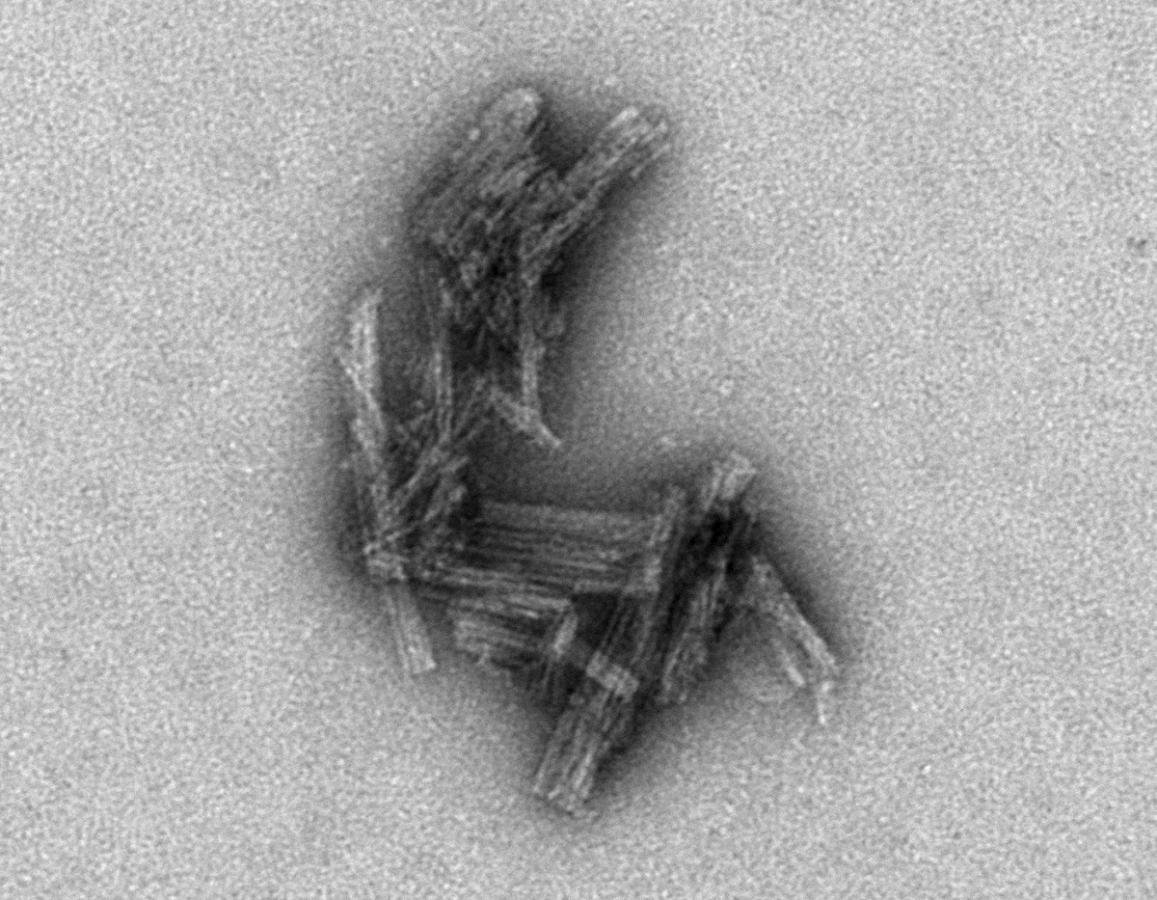 Clusters of tau protein, the protein tied to CTE, under an electron microscope. Image by the National Institutes of Health, resized.
Counting the ones who never donated
The new study, led by Boston University biostatistics PhD candidate Julia Gallini and professor Yorghos Tripodis with Mass General Brigham and the Concussion & CTE Foundation, went past the brain bank. It pulled federal death records for every former NFL player who died from January 2008 through December 2023.
That gave the researchers 2,362 players: 396 brain donors and 1,966 men whose brains were never studied.
Then they compared the two groups by cognitive symptoms, age at death, position and years in the league. Players with cognitive symptoms were about five times as likely to have their brains donated. That ratio, 4.97, is what the researchers used to scale the donor rate down to an estimate for everyone.
The answer: about three in four
From the brain bank to the whole group
The estimate’s statistical range runs from 69.6% to 78.3%. In August, the same research group had looked at 878 players who died from 2016 to 2021 and could only say the true figure was at least 25%, with an upper limit near 97%. The new method narrows that gap.
“This disease is preventable. Repeated head impacts are the only known risk factor, so we need to limit the number of times players are hit in the head.”— Julia Gallini, lead author
 Matt Hasselbeck with the Seahawks at Lambeau Field on December 27, 2009. Photo by Mike Morbeck, CC-BY-SA-2.0, resized.
What the number does not say
The researchers were careful about the limits. The 74.5% applies only to former players after death. It does not predict how many living former players have CTE, and it says nothing directly about active players. Not everyone with signs of the disease develops symptoms.
The donors were also different from the rest: more likely to be white, to have died younger and to have played longer in the league. The adjustment accounts for cognitive symptoms and those other factors, but the authors still call for more research on what the disease does in life.
“With CTE consistently found in less than 1% of donors to community brain banks, an estimated 75% prevalence among NFL players who died over a 16-year period is concerning.”— Julia Gallini
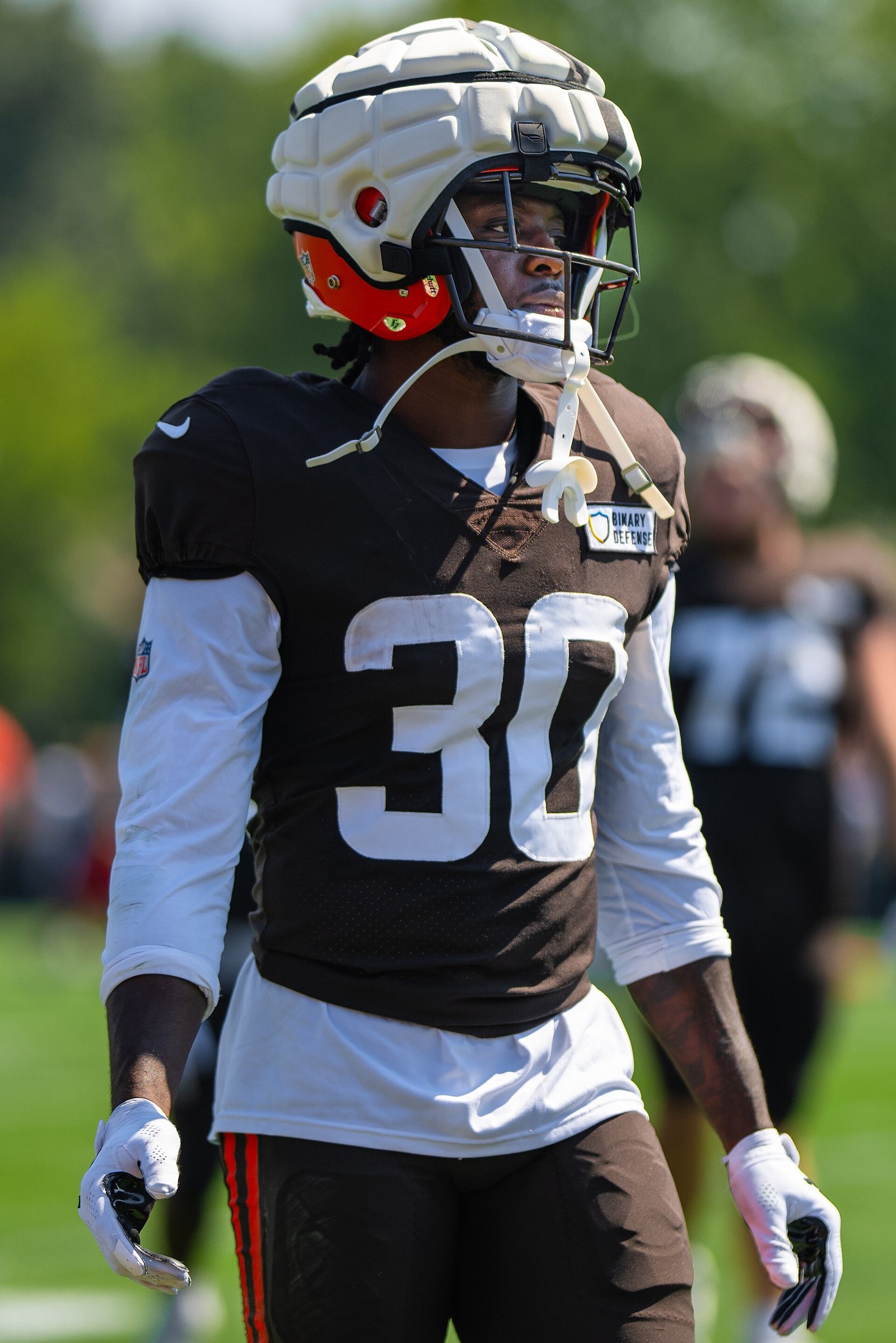 Hassan Hall wearing a padded practice cap at Browns training camp, August 2023. Photo by Erik Drost, CC-BY-2.0, resized.
The league's answer: caps, helmets, kickoffs
“The NFL continuously strives to make the game of football safer, including by implementing strategies to reduce concussions and head impacts.”— NFL statement on the study
The league points to padded Guardian Caps in preseason practices since 2022, newer helmet models and the dynamic kickoff. Its own numbers for the 2025 regular season show the trade-offs: game concussions went up from 129 to 168, and kickoff concussions rose from 8 to 35 as the new rules more than doubled the number of returns.
Concussions in regular-season games
The NFL Players Association called studies like this one critical to understanding football’s long-term effects. The researchers say the next step is diagnosing CTE during life, which would open the door to clinical trials and treatment.
Until then, the 74.5% is a count of the past: the players who died from 2008 to 2023, nearly all of whom played before the caps, the new helmets and the new kickoff.
No published comments yet. Start the conversation.