Unsportsmanlike conduct, taunting and celebrations explained
What the 2026 rulebook counts as unsportsmanlike conduct, why taunting is a dead-ball foul that can get a player ejected on his second flag, which celebrations are legal after the league and union's October statement, and how a coach's outburst cost the Patriots at Buffalo.
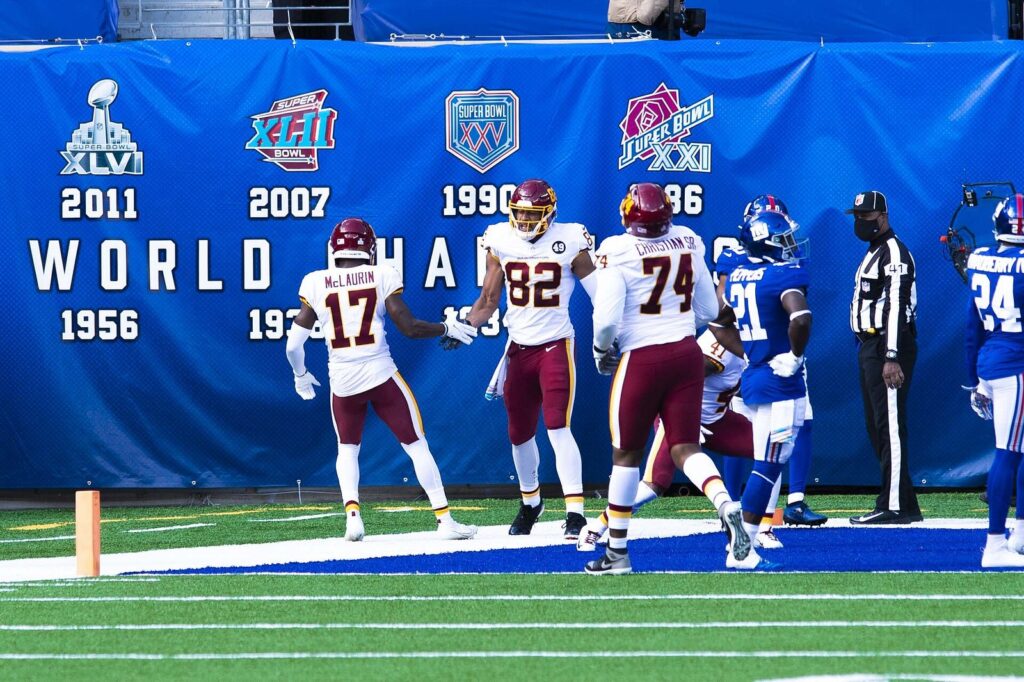
Unsportsmanlike conduct is the NFL’s catch-all for behavior that has nothing to do with blocking, tackling or catching. Taunting an opponent, cursing at an official, a violent or obscene gesture, a celebration that drags on, using a prop or pulling off your helmet on the field can all bring the same flag: 15 yards, plus an automatic first down if the defense did it. Two taunting or abusive-language fouls by the same player in one game mean he is ejected.
It is a live topic this season. On October 7, the league and the players’ union issued a joint statement on where celebrations cross the line, after a run of celebration fines and appeals. Three days earlier, New England coach Mike Vrabel drew an unsportsmanlike flag at Buffalo for what he said to an official. This guide covers what the 2026 rulebook bans, how the penalty is enforced and what happens after the game.
The rule: Rule 12, Section 3, Article 1
The 2026 Official Playing Rules start with a broad ban: there shall be no unsportsmanlike conduct, meaning “any act which is contrary to the generally understood principles of sportsmanship.” The rule then lists specific acts. These are the ones that come up most often:
- (a) Throwing a punch, a forearm or a kick at an opponent, even if it misses.
- (b) Abusive, threatening or insulting language or gestures toward opponents, teammates, officials or league representatives.
- (c) Baiting or taunting acts or words that may cause ill will between the teams.
- (d) Violent gestures, including a throat slash, simulating firing or brandishing a gun, the “nose wipe” gesture, or anything sexually suggestive or offensive.
- (e) Unnecessary contact with an official. A player who shoves, pushes or strikes an official is disqualified, and the case goes to the commissioner.
- (f) Prolonged or excessive celebrations, by one player or a group.
- (g) Using any object as a prop, other than the football after a score or a change of possession.
- (h) Taking off your helmet on the field or in the end zone during a celebration or a confrontation.
Acts (a) through (e) are penalized anywhere in the stadium where the officials have jurisdiction. Celebration and prop fouls, (f) and (g), are penalized anywhere on the field except the bench area. Punches and other contact after the whistle can also be non-football acts, which our ejections guide covers.
The penalty and how it is enforced
| Situation | What happens |
|---|---|
| Basic penalty, acts (a)–(h) | 15 yards from the succeeding spot, or a spot the referee judges fair after consulting the crew |
| Foul by the defense | 15 yards and an automatic first down |
| Close to the goal line | Half the distance to the goal if 15 yards would be more than half |
| Flagrant act seen by an official | Player also disqualified |
| Second taunting, abusive-language or punch/kick foul by the same player | Automatic disqualification, even if the penalty is declined |
| Foul after the end of the first or second half | Yardage enforced on the second-half kickoff or the overtime kickoff |
Most of these fouls happen after the play, so they are dead-ball fouls: the play stands, the yards are marked off from where the next play would start, and the down counts. Taunting is a special case. The rulebook defines a taunting foul as a dead-ball foul “that occurs at any time”, so a player who taunts while the ball is still alive does not wipe out the play. A touchdown still counts, and the yards are enforced afterward.
Taunting and the two-strike ejection
Rule 12, Section 4 says a player or a non-player, such as a coach, is automatically disqualified after being penalized twice in the same game for any combination of three fouls: a punch, forearm or kick (a), abusive language or gestures (b), and taunting (c). It does not matter whether the other team accepts or declines the penalty. The fouls do not have to be flagrant, and a foul during pregame warmups carries over into the game. Celebration, prop and helmet fouls do not count toward the two strikes.
Taunting has been a point of emphasis since 2021. Officials were told then to strictly enforce the rule, and that applies to words and to posing over or toward an opponent or his sideline. Through Week 5 of the 2026 season, public penalty logs show six accepted taunting fouls for 90 yards, and every one was called on the road team. Pittsburgh is the only team with two.
What celebrations are allowed
The league loosened its celebration rules in 2017 after commissioner Roger Goodell talked with more than 80 current and former players. Since then, players can use the football as a prop after a touchdown, celebrate on the ground, as in a snow angel, and take part in group celebrations. What is still flagged is anything offensive, anything prolonged that delays the game, and anything directed at an opponent.
The October 7, 2026 joint statement from the league and the players’ union spelled out three kinds of gestures that can bring a 15-yard unsportsmanlike penalty, a fine or both:
- gestures that depict violence, including guns or other weapons, or gang-related signs;
- gestures that depict smoking or drug use;
- gestures that are sexual in nature.
The statement also said celebrations that imitate drinking a beverage are not violations. For gray areas, the league said it will contact the player and give him direction first, and he will be told that continuing the celebration may bring future fines. Since then, Detroit’s Jameson Williams and Cincinnati’s Ja’Marr Chase have both won appeals of earlier celebration fines.
Coaches and the sideline
Rule 13 bans unsportsmanlike conduct by coaches, substitutes and anyone else entitled to be on the bench, during any period or timeout. That penalty is also 15 yards, and for a flagrant violation the referee can remove the offender for the rest of the game.
Week 4 showed how it works. At Buffalo, the Bills threw incomplete on third-and-goal from the New England 16, but a defensive holding flag on cornerback Marcus Jones gave them 5 yards and a first down. Vrabel left the coaches’ box and swore at an official about the call, and referee Bill Vinovich’s crew flagged him. Because the ball was at the 11 after the holding penalty, Vrabel’s foul was enforced as half the distance to the goal, and Buffalo had first-and-goal at the 6. Josh Allen ran in three plays later to tie the game 14-14. “When you use language like that, it’s pretty much a given,” Vinovich said afterward. Vrabel said he had apologized. The Patriots still won 29-26.
The same article covers kick blocks and gamesmanship
Rule 12-3-1 also lists fouls that have nothing to do with taunting. On a kick, a defender cannot jump or stand on another player, use a teammate to gain height, or get lifted up to block it. He also cannot run forward and leap over the line to block a field goal or extra point unless he was set within a yard of the line at the snap. A kicker or holder who fakes being roughed, using substitutes to confuse the defense, or defenders using words or movements to disrupt the offense at the snap are also unsportsmanlike. These are 15 yards from the previous spot if the ball was in play, with an automatic first down when the defense commits them.
After the game: fines and reviews
Every game is reviewed by the league office afterward, and fines for conduct the officials missed are common. Cleveland’s Deshaun Watson and Quinshon Judkins were fined for a Week 4 touchdown celebration that drew no flag during the game. Players can appeal, and as Williams and Chase showed this season, appeals can succeed. Since 2026, the rulebook also lets the officiating department in New York consult with the crew about ejecting a player for a flagrant act that was not flagged, as long as it does so before the next snap.
Watch the rules
The league’s video rulebook explains flagrant non-football acts, the unsportsmanlike fouls most likely to lead to an ejection.
What to watch on the next flag
- Who was it aimed at? Celebrating with teammates is legal. Directing it at an opponent or his bench is taunting.
- Was it the player’s second strike? A second taunting or abusive-language foul means an ejection, accepted or not.
- Did the play count? Taunting is a dead-ball foul, so a touchdown stands and the yards come afterward.
- Offense or defense? A defensive foul adds an automatic first down.
- How close to the goal line? Inside the 30, half the distance can cut the 15 yards.
- Was it the end of a half? Then the yards carry over to the next kickoff.
- No flag? The league can still fine it during the week.
Related WhyNFL reading: Ejections and non-football acts, Defenseless players and unnecessary roughness, Roughing the kicker, Coach’s challenges and replay, After the flag, 2026 penalties by the numbers.
A rule or explanation needs a second look? Tell us through our corrections process.