Tripping, striking, kicking and kneeing opponents explained
What Rule 12-2-14 bans as tripping, striking, kicking or kneeing, why it is a 15-yard personal foul with an automatic first down on defense, how it differs from clipping and unsportsmanlike conduct, and why Tripping has appeared only once through Week 5 of 2026.
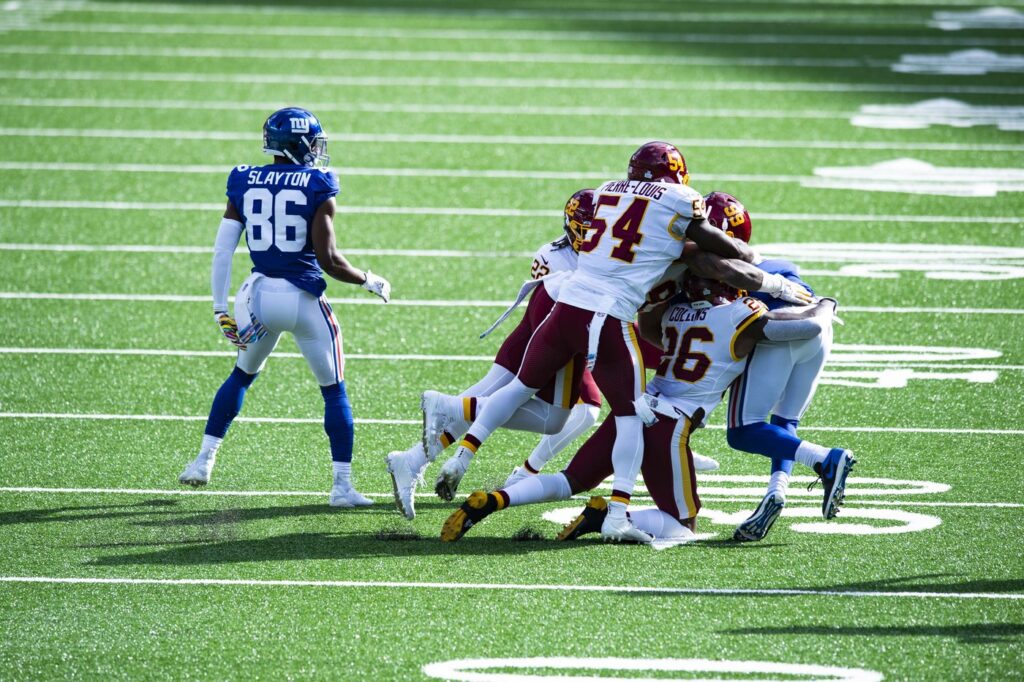
A tripping foul is using your leg or foot to obstruct an opponent — including the ball carrier. Striking, kicking or kneeing an opponent, or clubbing at the head or neck with a wrist, arm, elbow or hand, sit in the same personal-foul article. Under Rule 12, Section 2, Article 14 of the 2026 Official Playing Rules, those acts cost 15 yards. If the defense commits the foul, the offense also gets an automatic first down. A flagrant act can end in disqualification.
These flags are rare next to holding and false starts. Through Week 5 of the 2026 season, public play-by-play logs show only one accepted Tripping penalty in 79 games — a 13-yard flag on Buffalo against Detroit in Week 2. When one does land, it is usually because a defender stuck a leg out on a runner who was already past, or because someone threw a punch or kicked in a pile.
What the rulebook bans: Rule 12-2-14
Rule 3 defines tripping as the use of the leg or foot to obstruct any opponent, including a runner, and points to 12-2-14. Article 14 then lists five prohibited acts:
- (a) Striking an opponent with a fist.
- (b) Kicking or kneeing an opponent.
- (c) Tripping an opponent, including the runner.
- (d) Striking, swinging at, or clubbing the head or neck with the wrist, arm, elbow or hand — with narrow palm-of-hand exceptions at the line and on a loose-ball scramble.
- (e) Striking an opponent below the shoulders with a forearm or elbow by turning the trunk, pivoting, or any other clearly unnecessary motion.
The television foul code for tripping is usually TRP. A fistfight or kick that officials treat as a non-football act can also draw unsportsmanlike conduct under Rule 12-3 — our unsportsmanlike guide covers that side of the book.
The penalty
| Situation | What happens |
|---|---|
| Basic 12-2-14 foul (trip, strike, kick, knee, club) | Loss of 15 yards |
| By the defense | 15 yards and automatic first down |
| Flagrant act | Disqualification if the entire action is observed |
| Close to the goal line | Half the distance when 15 yards would be more than half |
Officials also use a specific tripping signal: a repeated motion of the right foot behind the left heel, after the personal-foul signal.
How this differs from related 15-yard fouls
Tripping is not the same as a clip or illegal block below the waist. Those are blocking fouls aimed at the legs from behind or outside the legal zone. Tripping is using your own leg or foot as an obstacle — often after you have already been beaten — including against the runner.
It is also separate from most defenseless-player and helmet-contact hits, from horse-collar tackles, and from general unnecessary roughness under 12-2-8 (leg whip, hitting a runner out of bounds, piling on). Officials may announce “unnecessary roughness” on the stadium mic for several personal fouls; the specific article still matters for the foul code and for replay or discipline review.
Punching or kicking at an opponent even when you miss can be unsportsmanlike conduct (12-3-1). Connecting with a fist, kick or knee is the 12-2-14 personal foul — and can still lead to an ejection if it is flagrant.
What it looks like on the field
Classic tripping: a defender is trailing a runner, sticks out a leg, and the runner goes down because of the contact with that leg rather than a wrap-up tackle. Classic striking: a punch in a pile, a kick at a player on the ground, or a clubbing forearm to the head after the whistle. Palm contact to the head while a defender is warding off a blocker at the line, done once in a single engagement, is the main listed exception — repeating that slap on the same opponent in one contact is not.
2026 so far
Through Week 5 (13,842 plays, 79 games in the public logs), Tripping has been accepted once. Unnecessary Roughness leads the broader personal-foul group with 54 flags; Unsportsmanlike Conduct has 10 and Taunting 6. Tripping sits near the bottom of the season chart — which is why a TRP graphic on Sunday still surprises the booth.
Watch related rules
The league’s video rulebook on non-football acts walks through punches, kicks and related disqualifying behavior that overlaps with Article 14. The second clip separates unsportsmanlike conduct (UNS) from unnecessary roughness (UNR) so the next stadium announcement is easier to parse.
What to watch on the next flag
- Leg or foot in the way? That is the core of tripping, including against the runner.
- Fist, kick or knee? Contact = 12-2-14 personal foul. Swinging and missing can still be unsportsmanlike.
- Head or neck club? Wrist, arm, elbow or hand to the head/neck is banned, with narrow palm exceptions.
- Defense or offense? Defense also gives an automatic first down.
- Flagrant? Disqualification is on the table when the whole act is seen.
- Code on the graphic? TRP for tripping; UNR/UNS may appear for related personal or non-football acts.
Related WhyNFL reading: Unsportsmanlike conduct and celebrations, Defenseless players and helmet contact, Clipping and illegal blocks, Horse-collar tackle, Illegal bat and illegal kick, After the flag, 2026 penalties by the numbers.
A rule or explanation needs a second look? Tell us through our corrections process.