Hip-drop tackle explained
What Rule 12-2-18 bans as a hip-drop tackle, why it is 15 yards and an automatic first down, how it differs from a horse-collar, and why HDT has not appeared as an accepted flag through Week 5 of 2026.
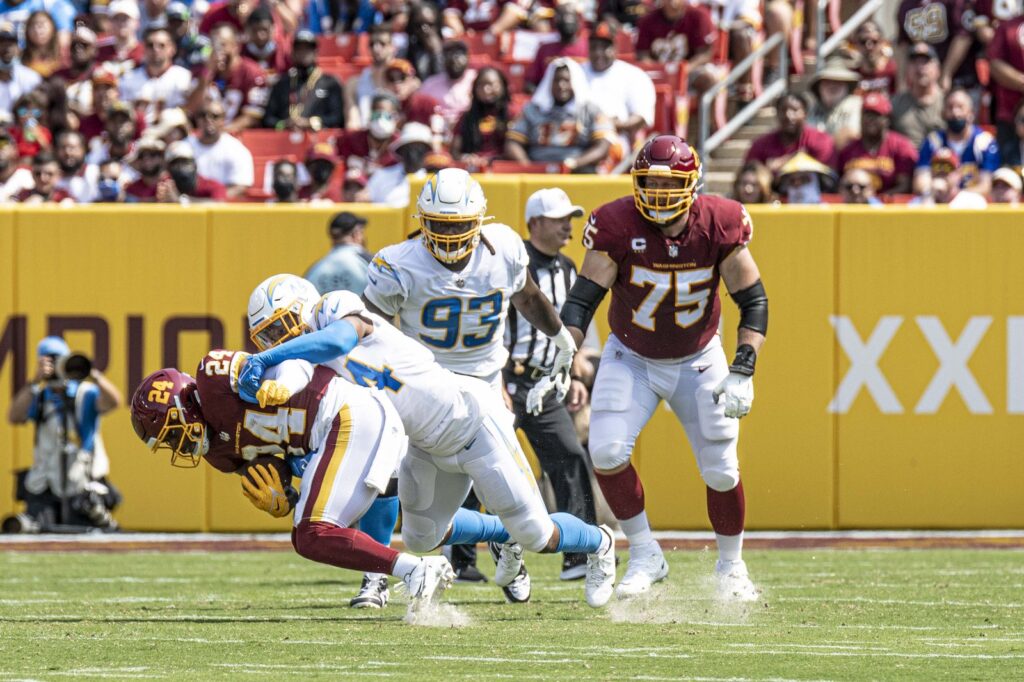
A hip-drop tackle is illegal when a defender grabs or wraps the runner, then unweights himself by swiveling and dropping his hips or lower body so he lands on or traps the runner’s leg(s) at or below the knee. Under Rule 12, Section 2, Article 18 of the 2026 Official Playing Rules, that technique costs 15 yards and an automatic first down.
The foul code on television graphics is usually HDT. Through Week 5 of the 2026 season, public play-by-play logs show zero accepted Hip-Drop Tackle penalties in 79 games — which matches what Competition Committee voices said when the ban passed: the full swivel-and-drop is uncommon, hard to see live, and often handled later as discipline when every camera angle is available.
What the rulebook bans: Rule 12-2-18
Article 18 says it is a foul if a player uses the following technique to bring a runner to the ground:
- (a) grabs the runner with one or both hands, or wraps the runner with both arms; and
- (b) unweights himself by swiveling and dropping his hips and/or lower body, landing on and/or trapping the runner’s leg(s) at or below the knee.
Both parts have to be there. A wrap-up that drives through the runner without the swivel-and-drop onto the legs is still a legal tackle. Dragging a runner down from behind without lifting the hips and falling on the legs is still a tackle. The banned move is the specific unweighting swivel that traps the lower leg.
The penalty
| Situation | What happens |
|---|---|
| Hip-drop tackle (12-2-18) | Loss of 15 yards and automatic first down |
| Foul code | HDT |
| Close to the goal line | Half the distance when 15 yards would be more than half |
| After the game | League discipline / fines remain available when the live flag is missed |
Because officials must see the grab/wrap and the swivel drop onto the trapped leg, many borderline plays never become live HDT flags. That is why a week of film review still matters even when the stadium never hears “hip-drop.”
How this differs from horse-collar and other 15-yard tackles
A horse-collar tackle (12-2-16) is about grabbing the inside collar of the shoulder pads or jersey — or the jersey at the name plate or above — and pulling the runner toward the ground. Hip-drop is about the defender’s own hips and lower body landing on the runner’s trapped leg after a swivel.
Hip-drop is also separate from most defenseless-player and helmet-contact fouls, from tripping (using a leg or foot as an obstacle), and from general unnecessary roughness under 12-2-8. Announcers may still say “personal foul” on the mic; the article number and foul code tell you which technique was flagged.
What it looks like on the field
Classic hip-drop: the defender has both hands or both arms on the runner, then spins his hips so his weight leaves his feet and his body drops onto the runner’s calf or knee area, trapping that leg as both players go down. Not a hip-drop: a form tackle that wraps and drives through; a shoestring ankle grab without the swivel drop; a drag-down from behind where the defender stays weighted and does not land on the trapped lower leg.
2026 so far
Through Week 5 (13,842 plays, 79 games in the public logs), Hip-Drop Tackle has not appeared as an accepted penalty type. Related personal-foul neighbors in the same sample: Unnecessary Roughness 54, Roughing the Passer 30, Face Mask 36, Horse Collar Tackle 1, Tripping 1, Chop Block 6, Illegal Blindside Block 6. HDT sits at the bottom of the live-flag chart — rare by design, still important when it shows up on a fine sheet.
Watch the rule
The league’s video rulebook walks through the hip-drop elements officials are trained to see. The second clip is the related horse-collar explanation, so the next “personal foul” graphic is easier to sort into the right article.
What to watch on the next flag
- Grab or wrap? One or both hands, or both arms, on the runner — element (a).
- Swivel and unweight? Hips/lower body leave the ground as the defender drops — element (b).
- Land on or trap the leg at/below the knee? That completes the foul.
- Legal wrap without the drop? Still a tackle.
- Code on the graphic? HDT for hip-drop; HC for horse-collar; UNR for broader unnecessary roughness.
- No live flag? Film-week discipline can still apply when every angle shows the swivel drop.
Related WhyNFL reading: Horse-collar tackle, Defenseless players and helmet contact, Tripping, striking and kneeing, Roughing the passer, After the flag, 2026 penalties by the numbers.
A rule or explanation needs a second look? Tell us through our corrections process.