whynfl.
Why a 60-yard field goal is not a free shot: distance and risk behind Cam Little’s range
Updated Nov 5, 2026
whynfl.
Not a free three points
Cam Little’s 68-yard make against Las Vegas expanded scoring range. It did not make a long attempt a free chance at three points — a miss can hand the opponent prime field position.
Nov 5, 2026
whynfl.
Why the 43 means 60
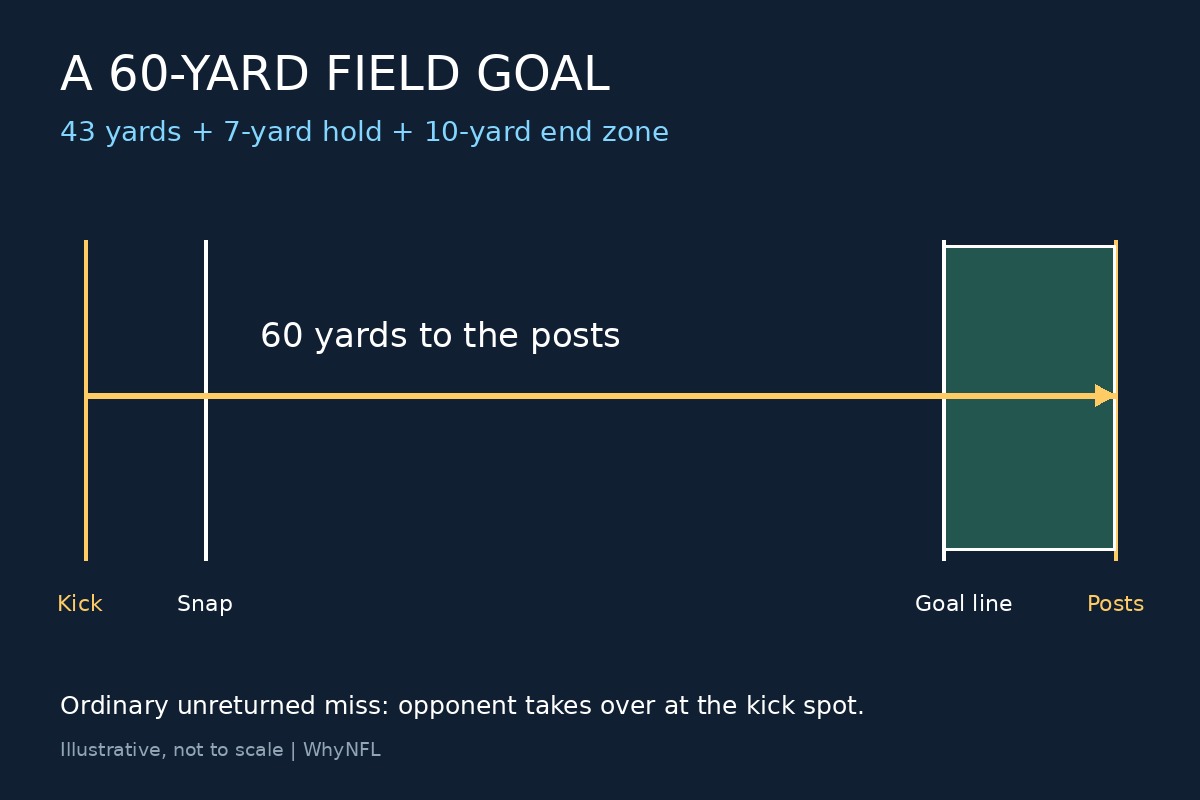
Posts sit 10 yards behind the goal line, and the hold is commonly about seven yards behind the snap. From the opponent’s 43, that setup is roughly a 60-yard attempt.
Nov 5, 2026
whynfl.
Miss gives the kick spot
On an ordinary unreturned miss, the receiving team gets the ball at the kick spot — or its own 20 if the kick was inside the 20 — not at the original snap.
Nov 5, 2026
whynfl.
Midfield after a 60-yard miss
A missed 60-yarder can start the opponent near midfield. A 65-yard miss can start them already in the other team’s half. Three possible points versus a different next possession.
Nov 5, 2026
whynfl.
Halftime changes the math
Little’s record kick came as the first half expired, so Las Vegas could not use favorable field position before the break. With time left, coaches must weigh the next drive.
Nov 5, 2026
whynfl.
What to watch
Do not treat every long warmup as an in-game promise. Watch the kick spot, the clock and the alternative — and remember Baltimore planned Jake Moody against Jacksonville after a groin injury to Tyler Loop.
Nov 5, 2026
Image credit
whynfl.
The full picture.
Read the complete article for more detail and the latest updates.